Saturday, April 26, 2014

I FINISHED CULTURAL AMNESIA

I FINISHED CULTURAL AMNESIA


Excuse me for my enthusiasm, but this is the first time I've completed a legitimate 850 page book. I don't think Order of the Phoenix measures up in terms of literary merit and difficulty in comparison to this book. I have read it. I have conquered the most difficult reading of my life.

That being said, I feel as though much of this book went over my head. I was too young to read this book. I understood many things, but there were many sections I merely glossed over because I did not have the focus, context, or interest to read deeply. James makes countless references to obscure cultural figures, some of which I could not identify, and others I knew only by name.

The book dealt with complexities of ideologies in the 20th century, and in that I learned a decent amount about how intellectual constructs created so much chaos and misery. About an artist living in the time of Hilter, James says, “So much lyrical talent should never have been required to deal with such an artificially contrived misery.” (p. 564) I think what makes the ideologies of the 20th century so scary is how they are easy to understand and difficult to logically refute. They are easy to disprove emotionally, but such disapproval requires much faith and bravery. 

But the book wasn't only about ideologies. It also discusses the artistic process and the difference between good prose and bad prose. Unfortunately for me, I don't know how much these lessons solidified in my brain.

Reading this book makes me want to be a writer, but it also makes me feel that I am utterly incapable of doing so. Many of James's lessons on writing stated that it depends on talent, and I do not know if I am actually talented or simply average. Though I practice writing a lot, I know that my work is not literature. What is the difference? Literature is formed in a series of sentences and paragraphs which communicate a story. 

I write jokes. They are good jokes, but they are merely lists. That is not bad in and of itself, but sometimes I wonder if I ought to attempt higher literature.

I believe that much of the reason I do not write longer literature is because I do not have much writing experience. Besides school, I do not write essays or stories. I haven't drafted a writing piece of mine since I wrote my college essay in October. How am I supposed to craft an excellent piece of writing when I never revise what I write? That's like a dancer who practices and performs entirely in improvisation. I suppose some people make careers that way, namely jazz musicians, but I don't think most writers could or should do that.

Still, I feel as if I've been avoiding quality checks on my writing for much too long. Luke says this is okay because I am working in the laboratory, and he has a point, but I wonder if I've been hiding. It's hard to take criticism. James explains this well. "An author's work is his personality, so he can't help feeling that any aspersions cast on it are cast on him." (p.623)

In addition to that though, quality writing is difficult and even unpleasant. Writing is like fitting together the pieces for a puzzle you haven't even seen yet. You don't know how to make it right, but you know pretty well when it's wrong. One of my close friends who wants to become a writer once told me, "I hate actually writing. It makes me cry." Perhaps that isn't true of all writers. I can get a lot of enjoyment out of revising my works. However, I get even more enjoyment out of revising other people's works.

The writers of the 20th century had to deal with more issues of profundity than now, I can clearly tell. Though we complain about the baboons in our government, they really aren't as severe as Hitler or Stalin. If artists are a product of their times, I feel as if my casual humor is actually quite appropriate. Funny, slightly cynical, but generally satisified.

I think that much of the profound literature of the 21st century will come from developing nations, not from the rest of the world. We in the US are very sheltered. The only way to truly understand that is to talk to people who live in other places. Yes, we all experience our own individual emotional issues, but it's difficult to compare them to people who must deal with those issues in addition to watching their world fall apart before their eyes into poverty and chaos.

I acknowledge that I am too sheltered to write sympathetically about many issues. I have to work with what I have and what I struggle with, which is why the book I am making for my individual project will likely be focused around personal empowerment. That is my battle. Hopefully the other battles will be tackled by other writers. And hopefully I will have the opportunity to read these other writers and help them influence the world at large.

Friday, April 18, 2014

On the Internet: Massive Scale Online Collaboration

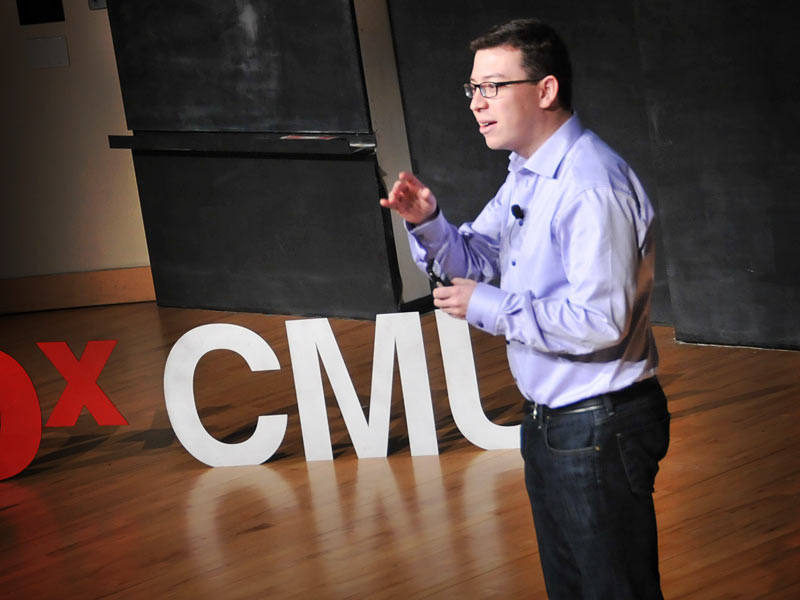
Luis von Ahn


Massive Scale Online Collaboration. What is it? To put it broadly, it is the use of many people who contribute pieces to a greater project. It is a way of turning time and energy into a product instead of money. It is a way of making your mindless web activities into something productive.

Luis von Ahn has found two amazing ways to yield this potential, which he talks about in his TED talk.

reCAPTCHA

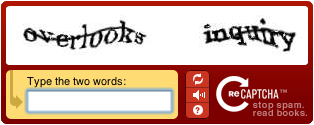
You know how some websites make you read disconfigured text in order to detect whether you are a human or computer?  That is something known as CAPTCHA, and it was invented by Luis von Ahn. This precaution has brought much safety to the internet.

But what is reCAPTCHA? After von Ahn realized the amount of time people wasted by filling out these forms, he developed the second edition so that each time you type in a phrase, you're actually helping to digitize books. 

The computer projects one word that it knows, and one word it does not. If you correctly identify the word it knows, it assumes the other one is correct. If ten people give the same word, that word has been confirmed transcribed.

And thus, reCAPTCHA not only keeps the internet safe, but also digitizes the wealth of human knowledge simultaneously.

Duolingo
Well I'd be darned. Duolingo, the site that taught me Spanish, the site which I wholly admire, was created by this very same person. Duolingo is able to operate for free because language learners practice their skills by translating internet articles. 

So while people learn languages for free, the internet is becoming translated into a multitude of languages simultaneously.


What other ways can the internet be used?

Gabriel García Márquez


Yesterday, the renowned Colombian author Gabriel García Márquez passed away at the age of 87.

My guess is that many people here haven't even heard of his name, let alone his most famous book One Hundred Years of Solitude. García Márquez is one of the most important figures in Latin American literature of all time, and his novel essentially defines the landscape of Latin America, both on a physical and metaphysical level.

He wasn't the first writer of magical realism, but he truly defined the genre. In his books, travelling gypsies would ride magic carpets, storms would rage for years. He turned metaphor into reality for his characters.

Some of his other great books include Love in the Time of Cholera, The Autumn of the Patriarch, Of Love and Other Demons, and The General in His Labrynth (which was often quoted in John Green's Looking for Alaska).

The world of literature has lost a great figure, but hopefully there will be someone to follow in his footsteps.

Saturday, April 12, 2014

Graphic Design, Web Safe Fonts and Gel Pens

On my last post about my journaling, Luke suggested that I purchase some Pilot gel pens to work with. Funny enough, I had been using a Pilot Gel pen all along without even knowing it. Now that it was brought to my attention though, I thought it would be nice to get a package of pens with more colors.

Drawing in my journal has made me develop an interest in design. After my first few attempts at noting things down, I realized my pages were such a mess, I couldn't comprehend anything. So, I decided to learn some things about graphic design so I could lay out my thoughts and write with different typefaces.

Typefaces all begin with a pencil and ruler. Then they are scanned into a computer system and digitized. What I like to do is take these digitized fonts and replicate them back on paper. I like the way they look imperfect, but at the same time, very clean.

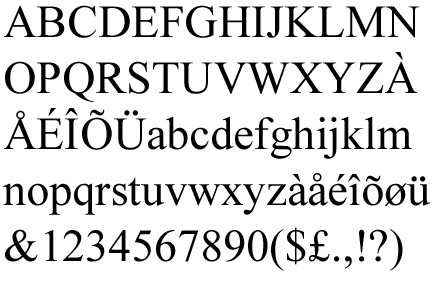
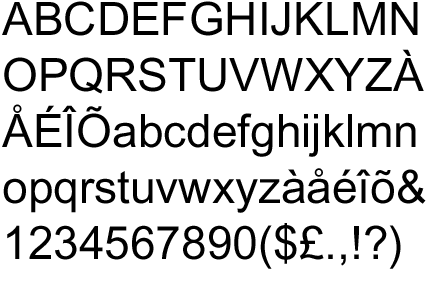
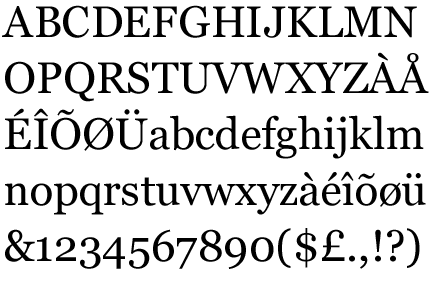
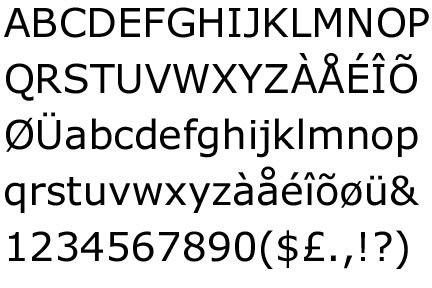
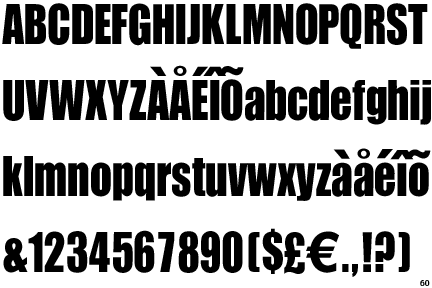
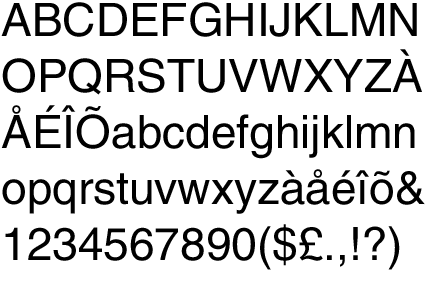
As an exercise, I practiced writing some of the different web safe typefaces with my colors. I also learned a little bit about each. Many of the sans serif fonts look the same hand drawn because the differences are quite subtle between them.

Times New Roman

The Times New Roman typeface is a Serif type face. That means it has a small line (called a serif) attached to different letters. The font was created in 1931 for a British newspaper called The Times after a designer wrote an article criticizing the print and typography of the newspaper. They did a pretty good job of fixing the issue, because Times New Roman is the basis for most serif fonts in existence.

Arial
If Times New Roman is the basic serif, then Arial is the basic sans serif. It's used everywhere and it has 20+ variants. The typeface was created in 1982.


Georgia
Georgia is another serif font that's similar to Times New Roman. It was designed in 1993 as a more readable serif font, released as a companion to the font Verdana.


Verdana
Verdana is a humanist sans serif font. Sans serif means it does not contain those tiny lines. Humanist means it is meant to look calligraphic. It was also created to look good on a computer screen.

Trebuchet
Trebuchet (pronounced either tre-bu-shet or tre-bu-shay) is another humanist sans serif typeface commissioned by Microsoft to look good on computer screens.

Courier
Courier is a monospaced slab serif. Monospaced means each letter and character occupies the same amount of width. Slab serif means the serifs are thick and blocklike. This font was created in 1955 to replicate the look of a typewriter.

Impact
Impact is a realist sans serif that has thick strokes and compressed spacing in order to create an "impact." It's used frequently in internet memes.

Helvetica
Helvetica has an interesting history, because it wasn't simply created for computers like many of the other web safe fonts. The typeface was developed in 1957 as part of the International Typographic Style (or Swiss Style) movement in graphic design. The font is a basic sans serif, but it has a tinge more flavor than Arial.


Wednesday, April 9, 2014

Nostalgia and Obama

Luke and I have been discussing things for me to present at the end of the year, and one thought that came into my mind was to make some sort of video or demonstration of the vast array of things that I've done in STAC. I decided to list all the activities I could remember from each year of STAC, and I was astonished by the sheer amount and variety of items I remembered.


I became filled with an overwhelming sense of nostalgia that prevented me from resting until late at night (another one of those nights where excitement keeps me away). The trouble with nostalgia is that it feels nice, but unsatisfying. It's as if the past was amazing and whole, but right now, there is something missing. As I thought this, I knew the logic was faulty. Although every year of STAC had its high points, it also had its low points. Somehow I've forgotten much of them, but I suppose that isn't necessarily a terrible thing, for there are a lot of negative feelings I've had in my past that are good to forget.

As I said, nostalgia is happily unsatisfying. I was reviewing for my AP Government test and I came across a section describing the entire process of Obama's campaign. I started feeling nostalgic for the early, optimistic Obama. Obama nostaliga. Obamastalgia. Don't you all remember how hopeful 2008 was? After becoming so disillusioned with Bush, he represented change in so many ways. Not only was he a fresh candidate, but he was also African American in a time where we had never had anyone but white men as president. Honestly, when I was watching his inaugeration ceremony, I thought something was going to happen to him, though I didn't want it to. I thought that he would be shot, that something to prevent him from making that oath, because I thought the system was ONLY for white men (even though I didn't like that) and it had been decreed as such by some existential force that has moderated it for generations.

Back during the campaign I was so optimistic, I convinced my mother to vote for Obama, and I went into the voting booth with her while she did it. She let me pull the lever.

Now, I've learned more about the world, about the president, and everything else. While I don't think that Obama is terrible, I wouldn't hail him as a great leader either. Not to mention, certainly got sadder over the years.

Before

After
I think the presidency is one of the only occupations where people smile more in the before picture than the after picture.

Nostalgia: bittersweet, incomplete.

Thursday, April 3, 2014

Journaling

A week ago or so, Tim gave me a set of 12 water color pencils and a notebook as a thank you gift for helping him with his teacher evaluations. I took the gift to heart and I decided it was time for me to bring out my art side.

Since then, I've been drawing a surprising amount.

I started by trying to draw simple things, like flowers and frogs. The results were pretty decent.


When Luke saw some of my work, he suggested that I create an "everything" journal. Essentially, it's a journal that includes text and images. 

I figured it was worth a shot. Notebooking is something that I've been considering for a while. I'm the kind of person that tries to do an insane amount of things simultaneously, and I find that a lot of the things I learn come in one ear and out the other. For me, the best way to remember things is to write them down, but I figure it's best to not write a blog post about every little thing I do in order to remember it. Perhaps that's more of a personal endeavor.

So I gave it a try. The first day I took random notes on things throughout the day, and I attempted to draw the portrait of Vladimir Nabokov on the back cover of my copy of Lolita.


The first thing I learned in this process: DO NOT USE PENCIL. IT SMUDGES LIKE CRAZY.

After that, I began noting in blue pen, although I continued to draw some more portraits in pencil.


I did this for a few days, but I noticed that my complex thought process could not be coherently expressed through the lists. Additionally, my ghastly handwriting gave me headaches.

My first thought was to learn something about design. To me, design is about turning chaos into coherence. It's about taking the complexity of the world and converting it into a form that can be tangibly digested.

So I googled some blogs, browsed until my computer gave me another headache, and put my pen to the paper. Though I was inspired by many of the images I saw, the one I stole from the most was a book about flatting written by New Zealander Lauren Earl.

The results were immediately evident.


I quite like making art because it helps me clear my mind. As you could imagine, I have a huge tendency to think too much for my own good. Art gives me relief from that.

My main concern now is with materials. Right now I'm using a slightly thicker than average blue pen on a basic sketchbook. Should I use a higher art quality pen so I have more drawing capabilites? Should I be using paper that doesn't seep through? Where do I even start looking for those things? I don't know jacksquat about art materials.

Thankfully, I'm in no rush.

On the Internet: Crisis Mapping

Back in the good ole days of AP Human Geography, I came upon an article about Crisis Mapping, and it's left an impression on me ever since.

Crisis Mapping

Crisis Mapping is the use of live-action mapping technology to mark the locations where people need emergency help in crisis situations.

The technique was created by Patrick Meier, who wanted to help his friends and others in Haiti get the medical attention they need. He began by reading tweets from Haitians requesting medical assistance and placing their locations on the mapping technology software known as Ushahidi.

After realizing the job couldn't be done alone, he called over some 100 friends and volunteers to work on the project. They started to compile text messages, UN reports, and more to create the live map. In the end, the map helped save many lives.


Think about that. A group of people sitting with their laptops in a Massachusetts apartment helped to save lives in a country that had just been hit by a devastating earthquake. That's pretty incredible.

The crisis mapping team has worked on a number of other disasters, including earthquakes in Chile, floods in Pakistan, and fires in Russia. They also created election crisis maps for Egypt and Tunisia. There are some situations they've chosen to not involve themselves in due to safety concerns, such as the crisis in Syria.

Still, it demonstrates more capabilities of the internet.

(I actually tried to download the software and use it myself, but unfortunately, I have no knowledge of programming, so perhaps my dreams of becoming a crisis mapper will have to wait)

Wednesday, April 2, 2014

On the Internet: Free Charity

Yes, I am turning these posts into a bit of a series.

The other day I spoke about how the internet has revolutionized education by providing educational resources and new procedures for learning. Today I shall speak about free charity.

One time I was talking to Danny and he told me, "I would rather offer my time and myself to help people rather than my money." This is a reasonable statement, considering how many of us teenagers do not have our own money, or if we do, we do not have much of it.

Of course, volunteering is a solution to this problem, but it's hardly the only one. I would argue that because of the internet, there are more ways to offer time instead of money to charity. Here are some of the methods.

Click-to-Donate Sites
Free Rice, a website that donates grains of rice when you answer trivia questions
I would be surprised if any of you haven't seen a click-to-donate site before. For those who don't know how they work, a click-to-donate site raises funds through ad revenue and donates that money to charity. Your click does not directly give money, but your visit does make a difference in the sense that if you hadn't clicked on the link, the ad revenue wouldn't have been generated and the donation would not have been given.

Theoretically, if enough people click the link, a substantial amount of ad revenue will be raised to give a legitimate contribution. For example, during the crisis in Haiti, clicks on Care2 donated $5,000 to Oxfam America's relief efforts. Other sites donate food, like Freerice and The Hunger Site.

Click-to-Donate sites were popular in the beginnings of the internet, but many of these sites were forced to shut down after the dot-com boom. Recently, the idea has been renewed with startups like Centup, mostly for helping web-based publishers make a profit on their content.

An idea: I wonder what could happen if this feature was introduced to mobile phone games.

Time Deposits
Websites that I refer to as "time deposit" sites work by having an organization pledge a certain amount of money based on how long people participate on the website. For example, the UNICEF Tap Project donated one day of free water for every ten minutes you left your phone standing still. These donations were funded by Georgio Armani and UNICEF's Next Generation, who pledged to give the amount raised based on how much time was put in.

Percent Donation

These are organizations who will donate a certain percentage of profits on your purchase to a certain charity. A great example of this is Amazon Smile. If you shop at smile.amazon.com and purchase certain products that fall within the parameters of the program, 0.5% of your purchase price will be donated to the charity of your choice. 

Though the number seems minimal, it can build up overtime. More importantly, it's a way of giving a small donation with almost no effort involved. If you were going to buy something from Amazon anyhow, why not use Amazon Smile?

Social Networking Apps

These apps are a bit of a variation on the time deposit model. Users are required to perform a certain activity and share that activity on social media. Corporations sponsor these apps because they are able to advertise through your social media posts. One example of this is Charity Miles, an app that donates based on how many miles you run, walk, or bike. Another example is the Donate a Photo app, in which the organization Johnson & Johnson gives a dollar to charity for each daily photo you upload.


A Concluding Note
It is wonderful that there are ways for people to donate time instead of money. On the other hand, and you've probably figured this already, there are a number of flaws with these mechanisms.

These sites require discipline from the user. In order to make a significant different alone, you must remember to return to the site on a regular basis, and most people aren't good at remembering. This discipline takes effort, and that effort may not seem worth it for a user whose donation is time consuming but relatively insubstantial. For the apps that require posting on your facebook, some people may feel uncomfortable forcefully advertising companies like Johnson & Johnson to all of their friends. I know I certainly do.

Additionally, most of these mechanisms require an organization that is willing to pledge money. An organization may prefer giving a simple monetary donation over setting up a complex apparatus that requires them to donate an unpredictable amount of money in the future.

The only direct time to money conversion is the click-to-donate model, which runs into the discipline and substance issue I listed above. Also, we learned from the Facebook stock crash that ad revenue alone does not equate to strong profit. 

To me, the website that best addresses these issues is Free Rice. The website combines the click-to-donate model with gaming. People have fun playing the game in their own right which gives them the reason to invest time, and that ad revenue generated from time leads to more donations. 

The ability for the internet to act as a mechanism for free donations many be inherently limited. Still, it does have some impact, and there may be potential for these systems to be improved. 

The time of lounging people is a large, untapped resource. I hope the future can bring more possibilities on how to utilize it.