Although I don't think The Fall was executed perfectly, I really liked the concept of having a magnificent adventure story paralleled to the not so grandiose emotional breakdown of the man who shared the story.
When Roy killed off every character in the end, it was a metaphorical representation of his utter emotional collapse. I feel like in our lives we make our emotions feel much grander than they actually are. For those recovering from depression, they always make it sound like they escaped a war. They talk about how they were "saved", how they're "a survivor", and they're "ok now." I'm not trying to insult those with serious depression in anyway. What I am saying is that we, as human being, always exaggerate what we feel. Why? Because we don't know of any other feelings but our own emotions. Everyone has an emotional scale, and when something painful reaches above the scale, we shatter. If we build ourselves back up, the scale extends. If not, we get stuck.
Also, when all the main characters were unfairly annihilated, to me it represented how you don't always win. In real life, the bad guys often get what they want, and efforts to be good and wholesome are ignored and unappreciated. In real life, you lose a lot more than you win, and you don't get something even if you deserve it. Even though the story ended with the mask man still alive and Odious finally dead, he never got the satisfaction of killing the enemy and he never got the girl, just like his real life. The world's never going to do your justice. You just have to accept your fate.
If I were to take these things into account on an artistic scale, the movie sends me one clear message. Art is the grandiose demonstration of ordinary life. In art we explore a world of fantasy that's so much more appealing than the world we currently live in, but everything in this fantasy world is based off of real life. Even though we can't take big adventures to kill our arch nemeses in real life, we can always imagine doing so through art. For the most part, we can't murder people, or run away from home, or force people to fall in love with us, or bring people back from the dead, but in art we sure can.
That is to a certain extent. Even in Roy's story, he didn't get everything he wanted. When we make art, we can only perceive a world based on our world of emotions. The action of creating art is honest. You can't lie about being happy when you're not. You can't pretend to be sad when you've never experienced sadness. If you're not being real with yourself making art, then you're not being yourself. Sure, you can make complex songs, pretty pictures, and visually stunning films. But it won't be long before you drive yourself crazy from all the lies you tell yourself. That is, unless you're not emotionally invested in your life. If that's the case, you probably wouldn't be much interested making art in the first place.
In a lot of ways, real life is boring, filled with a few good moments and a lot of garbage in between them. As an artist, you control your perception of the world, altering it into what ideal you want it to be. If you want to kill yourself, that's the world you make. That's what Roy chose, until Alexandria changed his mind.
Sunday, September 30, 2012

Thursday, September 20, 2012
Dance Mix ABC: Big Week Questions 1 and 2
Questions 1
1) You've worked on a group film and on your own. In which situation are you most comfortable - group or solo? Which do you work best in?
Although I work generally well in both group and solo environments, I think I that work better in solo environments. Without a group around me, I don't feel pressured to appeal to everyone's needs and I don't feel dragged down. My Be Kind Rewind group worked well, and we were generally on the same page. However a lot of times groups seem like a burden to me, and when I work independently I can invest more into my work because I don't have to drag other people along.
2) What did you learn that you expected to learn?
I learned that creating multi-layered music is a complex process, and you must be conscious of every piece of your work in order to make sure it stays interesting and sounds appealing.
3) What did you learn that you didn't expect to learn?
I learned that there's a lot to admire about digital musicians (is that a good way to describe them?). They essentially create a symphony of sounds, and although their compositions aren't John Williams material, they can be quite great. Although using Garageband loops to make a song wasn't difficult, it opened me up to a world that I didn't much acknowledge, nor respect. I still wouldn't ditch all my exotic instruments for synthesizers, but the simplicity of creating such a prodigious piece of music is a concept that appeals to me, considering that I prefer doing most of my work alone.
Also, it opened me up to the world of audio engineering, since I had to mix the song by myself. I wasn't expecting to look into that at first, but now I'm starting to become fascinated with it.
4) What didn't you learn that you expected to learn?
New techniques. A lot of what I did felt like stuff I did before, to be totally honest.
4) What didn't you learn that you expected to learn?
New techniques. A lot of what I did felt like stuff I did before, to be totally honest.
5) Praise your amazing achievement and explain your brilliant plan for pulling it off.
My brilliant plan for pulling this off consisted first with experimentation, in order to learn the tools. I observed what I had to work with. After pulling together some random loops, I listened to some music for inspiration. I created the whole song, but because I viewed the music alone as a little dull, I decided to add a vocal part on top.
I found a ghost story, and I revised the words in order to make them more lyrical. This is what I like to call artistic recycling. I compiled all the parts together, and then I mixed the parts, working with panning and trying to adjust the sounds; specifically trying to dim down the vocal part.
All of these components came together, and honestly, I think it sounded great. The piano riff in the beginning flowed into the beat beautifully. My voice sounded really cool, and the way I worded the phrases fit the rhythm just how I wanted to. It sounded a lot like LCD Soundsystem, which I'm totally proud of. The break into the chorus was an explosion, and the chorus itself was catchy. In the second verse when the woman was screaming and the crazy synth part came in, the whole thing got lifted to a whole new level. And in the end where the voice described his death to the tune of the lone piano, I almost cried when I hear it. In fact I almost cry every time I listen to it.
On Shiana's blog, she said it sounded professional. Thanks Shiana. That means a lot.
Questions 2
1) How much time did you spend working?
On the first day I worked for 2 and a half hours in STAC making the basic mix and probably about 3-4 hours at home adding the vocal line and tweaking. The next day I worked for another 2 and a half hours in STAC mixing the song. On the last day I spent 2 hours doing final mixing and trying to adjust the sound levels for the voice.
2) How much time did you spend thinking about the work - sort of sitting there and staring at it, or listening to it over and over again, etc.?
On the first day a lot of what I did was pounding stuff out without much thought. The next day, I worked straight through mixing, although a majority of that process included listening, interpreting what was needed, and adding it. On the last day, I listening to the song at least 8 times over trying to work out small kinks. Then I listened to it a few more times cause I liked it.
3) How much time did you spend doing other stuff that seems like work to that make you think you're working but you're not?
Personally I'm not the kind of person that pretends to be doing work to feel like I'm working, because when I sense I'm not getting anything done, I usually just stop. But I do admit, a lot of my "constructive listening" was just me mindlessly listening to LCD Soundsystem while I dozed off into la la land. Hey, we all need a break, and at least I was semi-productive.
4) How much time did you spend socializing?
The first day, not a bit. The second day, a little more. The third day, not so much. The fourth day, a lot more.
5) How did you use your community?
I didn't want to include my community so much because I wanted to keep things a surprise. But I did spend most days sitting with Jessica and Anika, and having them as moral support made me happy.
6) Rip apart your awful project and how did such a disaster happen?
Well, this project is a standard for how my standards have declined. Using musical loops to make a song? That's so easy. That takes no effort. That doesn't take more brainpower than clicking some buttons. The voice was too soft. And my voice doesn't sound good, even in speaking form. The recording lacked 3 dimensionality, and it sounded so flat. It was only in 1 key.
Techno music sucks. It all sounds the same, and it lacks both the complexity and the maturity of music in almost any other genre. It's so easy anyone can do it, so my project really isn't that special, nor is it any sort of accomplishment. The lyrics were weird, and probably unnecessary. All in all, it was a waste of 4 days, because I haven't really learned anything. Essentially, I was using all of the skills that I already knew, and the only reason I felt like I was trying something new was because it wasn't a project I specifically attempted to accomplish before.
7) You've completed a step on your path. What is your next step?
My next project is to work on the music a video game level designed by my brother. In addition, I've found a whole collection of books on world music from all different areas of the world in my basement. I've already read through Carnival Music in Trinidad, and next I'm probably going to read Music in East Africa. Soon, I will know about all music ever. Sort of not really.
I haven't really thought ahead on the rest yet. Maybe I'll try to complete another album this year and fix everything that went wrong last time.
Friday, September 14, 2012
Dance Mix ABC: Big Week Reflections
I know that we're going to do a reflection on the project in two weeks, but I want to reflect a little here, while my thoughts and feelings are still fresh in my mind.
I'm a bit disappointed in myself. Not because I thought the project came out badly. In my opinion, it sounded great. However, I feel like I didn't put enough effort into it. I chose a project that was too easy. Most of the tools I understood, and I wasn't doing anything particularly out of my comfort zone, like so many of the bold and brave people did today.
You all did a really good job. I mean that. My letdown is purely a product of my own feelings, and not because I felt personally attacked.
While I was reflecting on my disappointment, I realized something. Last year, I made a whole album in 40 days. Of course I feel like I'm falling short. Now that I've achieved something so great, I have to not only rank myself against the world of music, but I have to rank myself against myself. I've created an entirely new standard, and I failed to realize that while setting my goals, and I failed to realize that until now.
One of the biggest motivators in my life is humiliation. When my teacher shames me for not practicing, or my friends insult me for bad behavior, I always make it my goal to do better next time in order to redeem myself. Maybe that's just my ego talking. I like to take advantage of it, so I can keep improving.
Right now, it's time for me to find what to do next. I have a few options. One thing I could try is to make a better album, inspired by something completely different, using tools and techniques I've never done before. Another thing I could do is pursue this interest in audio engineering, or synthesizers.
Or I could take a deeper look into some other genres of music in the world spectrum. On my obnoxiously large hard drive, I've put a plethora of world music. In addition to that I've been really cultivating an interest in world affairs (another obsession of mine).
I suppose this is one of the main difficulties of an artist. How do you reinvent yourself?
I'm a bit disappointed in myself. Not because I thought the project came out badly. In my opinion, it sounded great. However, I feel like I didn't put enough effort into it. I chose a project that was too easy. Most of the tools I understood, and I wasn't doing anything particularly out of my comfort zone, like so many of the bold and brave people did today.
You all did a really good job. I mean that. My letdown is purely a product of my own feelings, and not because I felt personally attacked.
While I was reflecting on my disappointment, I realized something. Last year, I made a whole album in 40 days. Of course I feel like I'm falling short. Now that I've achieved something so great, I have to not only rank myself against the world of music, but I have to rank myself against myself. I've created an entirely new standard, and I failed to realize that while setting my goals, and I failed to realize that until now.
One of the biggest motivators in my life is humiliation. When my teacher shames me for not practicing, or my friends insult me for bad behavior, I always make it my goal to do better next time in order to redeem myself. Maybe that's just my ego talking. I like to take advantage of it, so I can keep improving.
Right now, it's time for me to find what to do next. I have a few options. One thing I could try is to make a better album, inspired by something completely different, using tools and techniques I've never done before. Another thing I could do is pursue this interest in audio engineering, or synthesizers.
Or I could take a deeper look into some other genres of music in the world spectrum. On my obnoxiously large hard drive, I've put a plethora of world music. In addition to that I've been really cultivating an interest in world affairs (another obsession of mine).
I suppose this is one of the main difficulties of an artist. How do you reinvent yourself?
Thursday, September 13, 2012
Dance Mix ABC: Day 4
Today I returned to my song for one last listen, and I found a big issue I'm really surprised I didn't notice earlier.
When I was in the musical Spamalot at camp (as the French Taunter), the vocal coach told me I was great at projection because I had a voice that can really pierce through sound. I didn't fully understand what she was talking about until today. While I was listening to the recording, my voice sounded so sharp it was like my ears were being attacked with knives. I knew something had to be done.
For about an hour, I messed around with different audio effects, trying to get a decent sound. I played with bass reduction, treble reduction, the visual EQ, the compressor, and I even tried using overdrive. The sound became more flat and electronic, which I kind of liked, but in certain points it would get scratchy and I had no idea how to fix that. Eventually, I got the voice to sound alright, not to shrill. It still peaks in places and scratches, but after a while I realized that there was nothing I could do to fix the problem without getting some help. And so I let it be.
In STAC I learned some more about audio engineering. I want to pursue this subject more. It's captivated my interest by meshing two of my favorite things: music and awesome technology. Luke once mentioned that for the STAC music people he wants to take a trip to a recording studio. I would love to learn enough to be able to try some actual adjusting in a studio (that is, if they'd even let me touch the buttons).
Then again, I don't want to obsess over it too much right now. I have a tendency to obsess over things for a short amount of time, and then completely forget about them. Before I do anything extreme, I want to see if this is an interest that will actually stick.
Wednesday, September 12, 2012
Dance Mix ABC: Day 3
Today, I made a bit of a breakthrough. For the first time, looking at all of the various buttons used by audio equipment, all the nonsense started making sense.
Yesterday, I downloaded the program Nanostudio to my computer. Why? Well, it was free. And lucky for me, it came with an amazing tutorial, not only explaining the features available in the program, but what these features actually do.
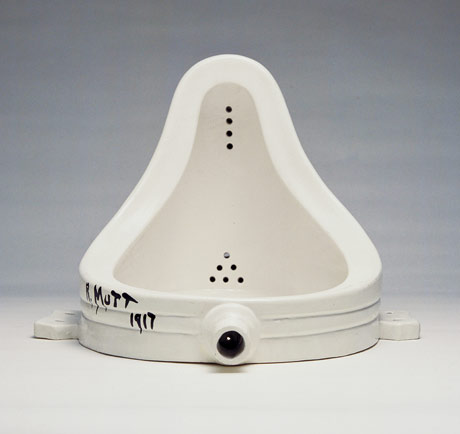
I'm a very hands-on/visual learner. Give me an instrument and I can make a sound quickly, but give me a book, and I can stare at the words for hours, trying to decipher them the way that someone would decipher an art piece of Duchamp's.
I started off by reading the glossary. Many of the definitions left me confused, so I figured I'd just try to read the manual listing the functions of each tool, and experimenting with the program right beside me. The manual was written in simple language, making it much easier for me to understand than the grossly verbose Wikipedia articles on the subject.


Obviously, this new knowledge isn't something I'm going to be able to add to my song. But it'd definitely something to think about for the future.
Yesterday, I downloaded the program Nanostudio to my computer. Why? Well, it was free. And lucky for me, it came with an amazing tutorial, not only explaining the features available in the program, but what these features actually do.
I'm a very hands-on/visual learner. Give me an instrument and I can make a sound quickly, but give me a book, and I can stare at the words for hours, trying to decipher them the way that someone would decipher an art piece of Duchamp's.
 |
| What does it mean? I don't understand. |
Although a majority of the words I needed to know were explained, some were not, and I had to push through the wild forest of the internet to find definitions. Thankfully, a lot of the information is cumulative, and the more research I do, the better I become at interpreting the information.
While learning how to use the drum pad, I found out that an output bus is a device that communicates sounds to the CPU, and send effects are sound effects the output bus adds directly to the sound before sending it to the computer (I think).
Velocity is the force of which a pad is struck, determining the volume. When you're not using your hands, this is important.
Here's a picture of the drum pad.

The synthesizer had much more to teach.
An oscillator generates sound, and its waveform determines the sound, based on the shape of the soundwaves.

Filters change the sound of the oscillator by removing certain frequencies (basically taking away higher sounds, lower sounds, in between sounds, or a combination).

Low Pass allows low frequencies, and takes away high frequencies.
High Pass allows high frequencies, and suppresses low frequencies.
Band Pass works in the middle.
The filter envelope allows for the sound to be shaped over a period of time, and prevents sound from being flat. This happens in 4 steps.
Attack: How quickly the envelope reaches the maximum level. I'm not sure, but I think this means how long it takes for it to reach its loudest level, or most intense level.
Decay: How quickly the envelope drops to the sustain level, where it remains steady.
Sustain: The level where the sound remains steady until it is released.
Release: How quickly the envelope fades to minimum when released. When the sound cuts out.
 |
| In the left picture, the upward slope is the attack, followed by the dropping decay, the dormant sustain, and the ending release |
Insert effects adjust the sound like send effects, but instead of recreating the sound, it simply changes it.

By the end of the 3 periods, this is about as far as I got, which isn't so bad. I won't be making a mix tomorrow, but at least I'm starting to understand audio engineering for the first time in my life. There's still much to work on, and I'm probably going to have to read the manual 5+ times before all of the functions stick in my head, but it's all good.
In addition to all of these learnings, I had a bit of an epiphany today.
I asked Luke a simple question. "After an audio engineer has experience, does he know exactly what he's doing? Does he know what every function does to the sound?" To me, it seems crazy that anyone could understand every minute detail of this complex system.
I got a response along the lines of this.
"At first, he does just play around with buttons, but after a while, he knows exactly what he's doing. His ear is trained so that he can tell what each track needs, and he has the abilities to make the changes necessary."
"Of course, it's a lot of fun to experiment. A few of my buddies would buy mixers and spray paint them black so they couldn't see the buttons."
"At first, you can get beginner's luck. But after a while, the tools begin to wear on you and become old. It's like when you make a friend and it's really exciting to hang out with them the first time, but after the 40th time it's just like 'hey'."
"It's like love. It starts out amazing and goes downhill. It's like sex. After a while you're just like 'hey'."
Thank you Luke for your words of wisdom. I'll be sure not to get my hopes up.
"After a while though, you realize it's good to be in control of what you're doing."
Ahh, human nature. You seek what you desire, and once you achieve it, you realize what you left behind. Anyway...
Luke introduced to me the idea of 3 dimensional sound, and I listened to Animal Zoo by Spirit. Although audio is only observed left to right, it sounded like things were coming from all directions: forward, back, above. But how could this be?
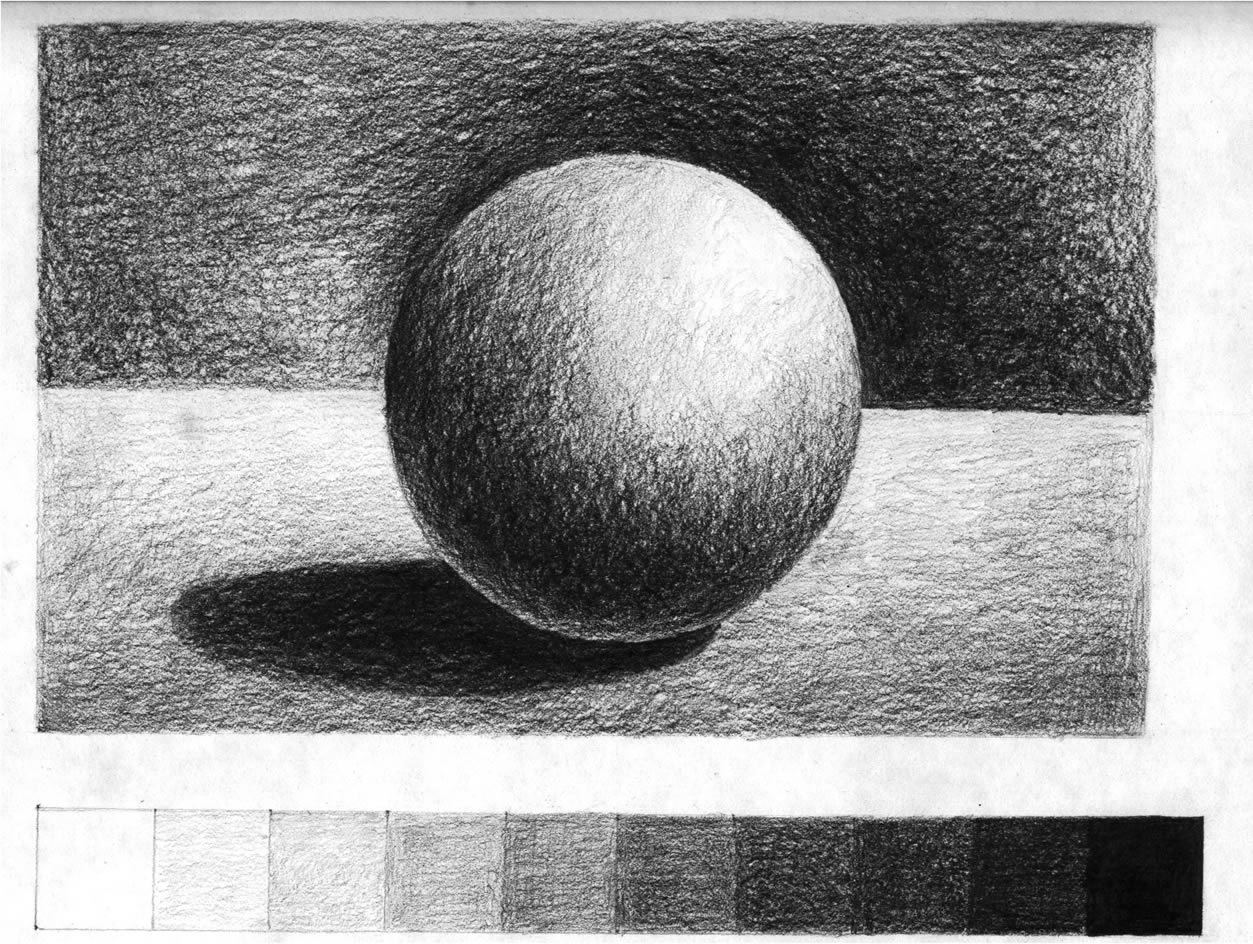
Well, we see art that looks 3D, even though it's on a 2D surface.
Although the picture is surely 2D, it gives the impression of a 3rd dimension, and that's exactly the goal audio engineers are looking for when they mix a recording.
I went back and listened to the mix I made yesterday. Needless to say, it was flat. If you were to compare my song to Animal Zoo, it'd look like the difference between the above image and a circle doodle.
 |
| At least I'm well-defined! |
I wonder if you can create audio illusions that fool your ears like visual illusions fool your eyes.
On that note, I'm going to end this post. Tomorrow I shall work final touches on my previous Garageband mix and explore Nanostudio further. I'm taking things in steps. It's a healthy process.
Tuesday, September 11, 2012
Dance Mix ABC: Day 2
Today, I worked on putting more panning into the track, making the transitions flow better, and improve the piece as a whole.
I succeeded in some things, and not others. One problem I had yesterday was improving the flow of 2 different sections: one ending on a dance beat and the other beginning with an ambiguous sound. Instead of heightening towards the ambiguous noise, the song seemed to fall flat. Thankfully, I figured out that adding a soft ambiguous sound right before the transition gives a good lead up. In other words, it sounds a lot better now.
One problem I have is in the vocal track. I added some vocal effects to a part, and for some reason at the beginning of a phrase you can hear a boom sound. I clicked random buttons trying to find a solution, but I really couldn't figure it out.
A lot of my strategy is clicking random buttons and hoping things works. This has been successful for the most part.
Another problem I'm having is the lack of good keyboard sounds. The beats are great, but the synth pads and simulated orchestral instruments really leave something to be desired.
At any rate, let me talk about some inspirations!
In terms of electronic music, probably my favorite groups would be LCD Soundsystem, Justice, Passion Pit, and St. Vincent.
Some favorite songs:
At any rate, I think I'm basically done with my project except for a few finishing details, exporting, etc. My plan for the next two days is to make another song, but using a different program. The Apple Store offers some really great music synths; a lot of which are totally free. By tomorrow, I'll find a good one and start playing with it. I don't know if I'll finish this next project so quickly, but I'll just see if I'll have 2 songs by Friday.
I succeeded in some things, and not others. One problem I had yesterday was improving the flow of 2 different sections: one ending on a dance beat and the other beginning with an ambiguous sound. Instead of heightening towards the ambiguous noise, the song seemed to fall flat. Thankfully, I figured out that adding a soft ambiguous sound right before the transition gives a good lead up. In other words, it sounds a lot better now.
One problem I have is in the vocal track. I added some vocal effects to a part, and for some reason at the beginning of a phrase you can hear a boom sound. I clicked random buttons trying to find a solution, but I really couldn't figure it out.
 |
| Huh? |
 |
| What? |
 |
| AHHHH!!! |
Another problem I'm having is the lack of good keyboard sounds. The beats are great, but the synth pads and simulated orchestral instruments really leave something to be desired.
At any rate, let me talk about some inspirations!
In terms of electronic music, probably my favorite groups would be LCD Soundsystem, Justice, Passion Pit, and St. Vincent.
Some favorite songs:
Everything by LCD Soundsystem is great, but I like this song in particular because I think it's really nice. It makes me smile.
It's songs like these that made me wish I had a crazy synthesizer.
This is what I wish mainstream dance music was like.
I love the chorus on this, how it explodes into electronic symphony. It really shows the full scope of the capabilities, and it's beautiful in a robotic kind of way. Sort of like the robot that seems loving and caring but doesn't really have a heart inside. But who cares?
At any rate, I think I'm basically done with my project except for a few finishing details, exporting, etc. My plan for the next two days is to make another song, but using a different program. The Apple Store offers some really great music synths; a lot of which are totally free. By tomorrow, I'll find a good one and start playing with it. I don't know if I'll finish this next project so quickly, but I'll just see if I'll have 2 songs by Friday.
Monday, September 10, 2012
Dance Mix ABC: Day 1
For this week, I gave myself what I consider to be a pretty simple task: to make a dance mix using the loops on Garageband, a MIDI keyboard, and perhaps even my microphone, but NO other instruments.
To delve into the techno genre, I gave myself another limitation: no using Garageband loops that sound like acoustic instruments. Sure, the Tabla loop sounds awesome, but using it would go against my morals. I deeply believe that if you're given a tool, you must use it for its purpose, and not pretend that it's something else. For example, when people use vintage effects on their photos, I think it looks awful. If you want an old-fashioned photo, take it on film. It's better to use digital for what it does best: crystal clear imagery and color distortion. Why pretend to make digital what it's not? This is my opinion, feel free to disagree.
And so, I immediately started off listening to the club dance beats. Garageband actually has some good quality beats to offer. Browsing through some loops, I found this eerie little piano riff. I set the piano riff as the intro to the song right before the dance beat, and the transition worked so well I almost gave myself chills.
As I continued though, I encountered some difficulties. Techno music can become very dull, very fast, unless you change things up and keep them interesting. However, some of the charm of techno music comes from its repetivity (is that a word?), so you need to have a balance.
I am no fool. I knew if I was going to the make music, I would have to listen to how other people have done it. For a while during class, I was listening to LCD Soundsystem. I only started listening to them recently, but quickly they've become one of my favorite groups. Every song they create is excellent.
A strategy I could hear in their songs was a gradual rise in intensity, in addition to the very tactful changes from one section to the next. It'd start with a drum beat, and then you'd hear a bass line, and then a chord line was added. The drum beat would change slightly, and then the bass line, and then the drum beat would change even more, and the chord line would get louder, and all of a sudden BAM! Symphony!
I tried to do that. At this point, I'm not sure if it succeeded, but I'm hoping so.
When I got home, I thought, why not try to add some vocals on this track? Instead of singing, I decided I would just tell a story instead, slam poetry style. I started googling ghost stories (for some reason the game ghosts in the graveyard was on my mind), and I found one I quite liked.
The premise is, a middle-aged widow moves to town. She always wears gloves, even indoors. Under her gloves she had a gold hand. A man asks her about it, and she explains that she lost her hand a few years ago. He decides to seduce her, and once they are married, he swiftly kills her, takes her hand, and keeps it under his pillow. Then, she comes back from the dead, possesses the hand, and chokes him to death.
Revising the diction so that it would sound more poetic, I added this upon the mix I made.
It sounds creepy.
And I kind of like it.
Tomorrow, I plan on working with mixing; playing around with panning and the other tools Luke showed me when he was mixing my album, in addition to making some of the transitions flow better. At this rate, I might be done by the end of tomorrow. And you know what that means?
I'm gonna make another one!
To delve into the techno genre, I gave myself another limitation: no using Garageband loops that sound like acoustic instruments. Sure, the Tabla loop sounds awesome, but using it would go against my morals. I deeply believe that if you're given a tool, you must use it for its purpose, and not pretend that it's something else. For example, when people use vintage effects on their photos, I think it looks awful. If you want an old-fashioned photo, take it on film. It's better to use digital for what it does best: crystal clear imagery and color distortion. Why pretend to make digital what it's not? This is my opinion, feel free to disagree.
And so, I immediately started off listening to the club dance beats. Garageband actually has some good quality beats to offer. Browsing through some loops, I found this eerie little piano riff. I set the piano riff as the intro to the song right before the dance beat, and the transition worked so well I almost gave myself chills.
As I continued though, I encountered some difficulties. Techno music can become very dull, very fast, unless you change things up and keep them interesting. However, some of the charm of techno music comes from its repetivity (is that a word?), so you need to have a balance.
I am no fool. I knew if I was going to the make music, I would have to listen to how other people have done it. For a while during class, I was listening to LCD Soundsystem. I only started listening to them recently, but quickly they've become one of my favorite groups. Every song they create is excellent.
A strategy I could hear in their songs was a gradual rise in intensity, in addition to the very tactful changes from one section to the next. It'd start with a drum beat, and then you'd hear a bass line, and then a chord line was added. The drum beat would change slightly, and then the bass line, and then the drum beat would change even more, and the chord line would get louder, and all of a sudden BAM! Symphony!
I tried to do that. At this point, I'm not sure if it succeeded, but I'm hoping so.
When I got home, I thought, why not try to add some vocals on this track? Instead of singing, I decided I would just tell a story instead, slam poetry style. I started googling ghost stories (for some reason the game ghosts in the graveyard was on my mind), and I found one I quite liked.
The premise is, a middle-aged widow moves to town. She always wears gloves, even indoors. Under her gloves she had a gold hand. A man asks her about it, and she explains that she lost her hand a few years ago. He decides to seduce her, and once they are married, he swiftly kills her, takes her hand, and keeps it under his pillow. Then, she comes back from the dead, possesses the hand, and chokes him to death.
Revising the diction so that it would sound more poetic, I added this upon the mix I made.
It sounds creepy.
And I kind of like it.
Tomorrow, I plan on working with mixing; playing around with panning and the other tools Luke showed me when he was mixing my album, in addition to making some of the transitions flow better. At this rate, I might be done by the end of tomorrow. And you know what that means?
I'm gonna make another one!
Saturday, September 8, 2012
Electronic Music (A Journal)
It's kind of a tendency of mine to obsess over a lot of things. Recently, I've become infatuated with music electronics.
It all started when I got a turntable for my birthday (which I should probably thank John and the Brautigams for, thanks guys!). I've always been curious about how DJing works, how to mix tracks, and all that jazz. The night of my Sweet 16 as all my guests slept, I snuck off into the basement at 5 AM to set up the turntable.
As a young and foolish teenager I am, I thought this was a task that I could easily accomplish, and I'd be ready to MC in about 30 minutes. WRONG!
The first thing I see when I open the box is this sheet.


I believe at this point it was 6 AM. Full of excitement and anticipation, I took a spare record I found, placed it on the platter, applied the needle, and pressed play.


Thus, at 7:30 AM when the light came out, I set up my whole system. I guess it was time to finally learn how to DJ. I searched DJing up on some websites, but I only learned one thing. In order to have a full set up, you need 2 turntables and a mixer. Looks like I'm going to have to save up some more cash.

It all started when I got a turntable for my birthday (which I should probably thank John and the Brautigams for, thanks guys!). I've always been curious about how DJing works, how to mix tracks, and all that jazz. The night of my Sweet 16 as all my guests slept, I snuck off into the basement at 5 AM to set up the turntable.
As a young and foolish teenager I am, I thought this was a task that I could easily accomplish, and I'd be ready to MC in about 30 minutes. WRONG!
The first thing I see when I open the box is this sheet.

Immediately, I'm approached with a manual filled with many words I've never heard of before in my life. The first thing I must do is take the platter and place it on the turntable. On top of the platter goes the slipmat. Then I have to install the cartridge into the tube lock. After that, I have to adjust the stylus pressure, and if I do it wrong, I break the needle.
This is putting a lot of pressure on me. First of all, I don't know what any of these terms mean, and as much as I can try to guess, all I see are a bunch of unidentifiable pieces of technology. In addition, if I screw up, I break the machine. Being the logical person that I am (or not), I took a look at the manual.

Just my luck. The manual says the exact same thing as the previous sheet. I should probably try to identify these objects.

Carefully, I read the overview, making sure to identify every object I have laying beside me and know what it does. Then, I put the main pieces together. After watching some online videos, eventually I do figure out how to work the needle, although at the moment my knowledge on how the stylus pressure works is limited. It seems to work fine though.
 |
| Damn. That's one sexy turntable. |
No sound.
I suppose you more vinyl savvy individuals know what I did wrong. Quickly, I learned that there was one part I had yet to attach. The RCA Cable.
What is this mysterious cable? And what does it connect to when the ends consist of a red output, a white output, and a metal fork?
In this case, an RCA cable carries audio signals to a device, such as an audio amplifier, or preamp. This isn't for your usual guitar amp. Trust me. I checked. Instead, the signals are received by something called a Stereo Receiver, which is a box who's soul purpose is to allow an orgy of cables infiltrate its backsaw. Apparently, this is a common device in home entertainment systems. Personally, I don't ever remember hooking my TiVo up with that box, but maybe I'm just really uneducated on the subject of entertainment technology.
Since my house is a craphole of gold, I managed to find a stereo receiver lying against a set of cabinets.

For the longest time, I thought it was just a VCR, but alas, the box had much more magical capabilities than originally thought. The plug's got to go into one of these inputs, right?

I'm guessing by this time it was about 6:30 AM, and I was kind of going bananas. However, I happened to read on the RCA connector article on Wikipedia that it used a phono connection. And surely enough, on the bottom left of the box, I found the input for the wires. In this picture, you see them plugged right in. I admit, I did have to google how to attach the wire with the fork end. But now I could finally play music, right?
Wrong again. I never hooked up speakers. Stereo receivers only receive inputs. They don't deliver them.
For those who are curious, those black and red switches on the mid-right side are the speaker inputs. I've never seen inputs like these in my life. But I did remember that my mom recently got some high tech speakers for our computer. Perhaps they shared the same technology.

This might work! Except for the fact that those speaker outlets are used to connect to the side speakers attached to the subwoofer. Woof woof?

It's ok though, because I found out that if I use an adapter, I can take the headphone output and plug the speakers into that. I pressed the phono button on the receiver, remembering the input, and finally, FINALLY, it works.
 |
| Ignore the beats. I got them when I was 13 and I didn't know better. |
After learning so much about the technology, I was more curious than when I first began. I browsed google for hours, trying to figure out what each input in the back of that receiver was for. For the most part, I didn't find much. But the whole adventure had taught me so much about technology, I wasn't left particularly disappointed.
Until I can get a full DJ setup, I figure I'll try a digital turntable, to see if I can get a hang of the ropes. I downloaded Mixxx, a free app on the Mac app store for learning how to DJ. I'll get the hang of this in no time, right?

Dear goodness, what do all these buttons mean?!
Looks like I won't be a DJ anytime soon. But at least now I have a turntable so I can listen to my favorite record.
 |
| Ahh Klezmer. |
Wednesday, September 5, 2012
The Creative Habit: A Creative Autobiography of Ellen Cooper
- What is the first creative moment you can remember?
I think I was around the age of 7 when this happened. My brother was playing his new game The Legend of Zelda: Ocarina of Time, which I'm sure you've all heard of. My mom was making me practice my violin, which surprisingly, is not something she made me do very often as a child. As I sat on the couch with the violin in my hands, I watched the opening credits to the game for the upfteenth time. That song was basically engrained into the back of my mind. It was at that moment I figured, heck I can play this! I picked up my violin, and there I was, playing along to the video game soundtrack itself, pitch for pitch.
- Was anyone there to witness it?
My brother was pretty ecstatic when he saw I could play his favorite theme song. Later, my mom came and I showed her. She was pretty impressed as well. Even my dad, Mr. Hard to Please, took pleasure in my abilities.
- What is the best idea you ever had?
I'm not sure if this implies an artistic idea or just a regular idea in general. If this implies a general idea, then my best idea would be how I cleaned out my basement and turn it into a music studio. Once I have an established place for myself and my work, I was able to accomplish a lot more. I believe that all of my achievements from the creation of the studio have derived from the studio itself. My inspiration to practice and work hard, my curiosity for exploring various genres of music through miscellaneous CDs my mom has forgotten in the basement, my curiosity about different cultures I explore through reading books (now organized), and of course, my album.
- What made it great in your mind?
I could have privacy and organization. Considering how much of a crap hole my house is and how much my mom likes to nose into my business, this sounded pretty good to me. Alright, my mom's not that nosy. But I'd rather not try to be writing songs in the living room where everyone's breathing down my back and telling me to shut off the piano because they want to watch The Daily Show.
- What is the dumbest idea?
I don't believe this is my dumbest idea in life, but it probably is a pretty stupid decision for my career. For some odd reason, while at a performing and creative arts camp, I've spent my past 3 summers learning comedy instead of working on music.
- What made it stupid?
It's not like my camp doesn't have a music program. They do, and it's actually pretty great, considering how it offers music groups such as orchestra, marching band, a cappella choir, jazz band, and pit orchestra. Not to mention that you have the ability to take lessons in any instrument you please, as long as you can rent it out. No. Instead of embracing all of these opportunities, I wrote sketches and coached an improv troupe, both of which I'm probably not qualified to do in any respect. Not to mention, I missed out on the opportunity of making connections with the young musicians there and the counselors, many of whom are professional musicians or teachers. Many of my friends told me, "Ellen, why are you a CIT in the clown shop when you're actually talented in something else?" I tell them it's because I do what I want, but I always wonder if things could've played out better.
- Can you connect the dots that lead you to this idea?
Before I joined STAC, I had the fantasy that I was going to be on SNL. I figured it'd be a pretty good fit for me, because I always enjoyed making people laughed and it seemed to be something I'm good at. Once I found my calling in music however, I was already far too deep in my comedy training, both emotionally and commitment wise, to give it up. Plus, I liked the people better. The kids are just smarter in general.
Again, I don't think I regret it as a decision in my life, because learning the art of comedy has greatly empowered me as a person and taught me many important life skills. In terms of a career in music though, I probably missed out on a great opportunity.
Subscribe to:
Posts (Atom)