Showing posts with label 11th Grade. Show all posts

Sunday, May 12, 2013

Difficult Ethical Questions

Why I'm Thinking About This

Today, a friend of mine sent me videos about abortion. Usually I've supported the idea of abortion because I believe that a woman should have the choice on whether they want to carry the heavy responsibility of a child, a woman shouldn't have to stop their career due to a mistake, and a child should not be brought into a family where it is unwanted. However, you cannot ignore the fact that abortion does actually involve killing something. It is causing death. The question of whether it is murder is debatable, but the fact that it causes death in something that could otherwise survive is certain.

I don't know if you guys are aware of this, but there are certain conditions where abortions don't work and the baby survives. This happens because many late-term abortions are done by inducing labor in the mother and giving birth to the baby prematurely, hoping it will be dead. Sometimes it's not. When the abortion fails but the mother still doesn't want the baby, they essentially abandon the baby and leave it to die.

This video talks about it. If you ignore the anti-Obama rhetoric, it delivers useful information.

Sometimes though, they reach an in between phase. The baby is alive but the mother hasn't fully given birth. When this happens, they cut the baby's neck with a scissors to kill it. This is called a partial birth abortion.


It is very easy to dismiss conservative arguments as ignorant and old-fashioned, but what does that prove? There is a decent point to be made that these techniques are discomforting and borderline inhumane, and that should not be ignored. I mean you can ignore it, but that just means you're being an ignorant bystander. It's fine if you want to be that way, but I'm not satisfied with accepting things as they are until I fully understand them.

As thus, I figured I had to analyze this issue piece by piece in order to form my own opinion.

Is Abortion Ethical?

Though I have not done in-depth research as of yet, I have seen both sides of the issue. It's a very difficult thing to judge. To try and make sense of it, I created a chart in which I asked numerous questions.


The picture may be tough to read, so I'll type what I wrote.
  • Is a fetus a person?
    • At conception?
    • After _____ weeks?
  • Traditions of abortion
    • Sparta: Unwanted/Undesirable children abandoned on hilltops
    • Spring Awakening: Girl sent to get abortion after coerced into sex. It kills her.
  • Women will try to get abortions even if it's illegal
    • Many of these women will die
  • If an aborted baby survives, are we morally obligated to save it?
    • What if it has a terrible disease? (Can this be detected early?)
    • What if abortion procedure dooms its death? (More common?)
  • If a baby is destined to be born with a major deformity, is abortion to spare it from suffering noble?
  • If a person is not ready to support a child, should we force them to grow up and do so anyhow?
    • What if it's clear that the child will live a troubled life?
  • Should people pay consequences for promiscuity?
    • Is promiscuity unethical or simply undesirable?
  • Does contraceptive make abortion less of an issue?
  • Does downward demographic trend mean that only good parents have children?
Without much information, it's hard for me to make a full judgment. However, I think these are a good set of questions to think about.

One of them, the one about promiscuity, actually spurred another debate inside my head; one that I had been thinking about for a while. I made another chart.

Is Promiscuity Unethical?


In the book Understanding Homosexuality, Roger E. Biery lays out three purposes for having intercourse: Reproduction, Emotional Bonding, and Enjoyment. Thus, I used these categories to analyze the ethics of promiscuity.

Reproduction

  • Promiscuity ignores this
  • Contraceptive and abortion nearly eliminates consequences
  • What about when it doesn't?
  • If reproduction is undesired, how will we continue the human race?

Emotional Bonding

  • Is emotional attachment always desired?
  • What if emotional contact is desired but person does not know how to get it?
  • What if it's not?
  • What if one person wants emotional bond but other does not?

Enjoyment

  • Is using others for sexual enjoyment manipulative?
  • What about danger of STD?
  • What about pregnancy?
  • Is it animalistic? Should we be more civilized?
  • Or is it unnecessary to restrain ourselves due to contraceptive?
  • If both agree its for enjoyment and contraceptive is used, is it ok?
I started at the board and tried to view the issue from the logical perspective. I ignored theological justifications such as "sex is a gift given to us by God that must not be abused" because I do not find them relevant in rational arguments.

Conclusion

This is what I decided.

In a perfect scenario, where both parties know that the sex is only being used for enjoyment purposes, promiscuity is ok. HOWEVER, this kind of scenario is mostly idealistic for two reasons. First of all, emotional complications are difficult to eliminate (as seen by the questions I listed for emotional bonding, those are serious issues that are difficult to solve or discuss). Secondly, accidents happen, people can get STDs and pregnancies.

In theory, promiscuity is not wrong, and if you are very careful, you can be responsibly promiscuous. However it takes a lot of effort to end up in the ideal scenario, often more than it's worth, and dedicated relationships make life a heck of a lot easier.

More Questions

Throughout my life, I have often had my opinions formed by other people. It's difficult for me to maintain a position on pretty much any subject and I'm easily persuaded into changing beliefs. This exercise is very helpful to me because it helps me find definite logic for my beliefs. Also, I quite enjoy analyzing these questions. It takes the abstract world and puts it into concrete terms that I can understand, which makes me feel more empowered, which makes me happier.

I think as I go on, I'm going to use this approach to analyze many of the world's major issues for myself. Perhaps I'll find some brilliant solutions. Who knows?

Tuesday, May 7, 2013

Hamlet and the Baker's Son


For this quarter, I was given the autobiography Hamlet and the Baker's Son by and about Augusto Boal. To quote Luke, "This book is about three of your favorite topics. Theater, politics, and South America!" Obviously I had to look at it.

A Rough Summary

Augusto Boal is a Brazilian theater director, but he is different from most other directors (I would think, not that I know very much about other directors). His primary quest is to discover the "true Brazil," to move theater from the upper and middle-classes and bring it to the average people. He was imprisoned and exiled during the time of a brutal dictatorship. Now he has returned to Brazil, where he continues developing his new theater techniques.

Finding Context

Due to a lack of theater knowledge, I had a decent amount of trouble following along as he described all of the shows he directed. I was also confused about the events happening during the time of the book. In order to get some context, I did some research on Brazilian history. Brazil is a country with a very interesting history. It has gone from being a colony, to an empire, to a democracy, to a dictatorship, back to a democracy, back to a dictatorship. Imagine if the communist movement had been successful there. The country would have had every form of government conceivable! Except for theocracy, but that's pretty minor.

Still, I have difficulty analyzing it. I feel like the book had so much to offer but I couldn't compute it all.

Nationalism

Boal was an artist, and as an artist, he was surrounded by numerous kinds of social movements. These were predominantly leftist socialist movements, some even communist. However, he never affiliated himself with any kind of ideology. Instead, he was more of a nationalist; he wanted to find the heart and identity of Brazil.

He did this in a number of ways. He set up writing workshops for Brazilian writers, he drove out to obscure areas of the country to perform, and he tried to get the audience involved in his shows. He tried to find the true people.

But I think what makes Boal so respectable is how he acknowledges that he cannot fully understand the struggles of Brazilian peasants.

There were two moments where he realized the limits of an artist. The first is when he discovered what he refers to as "Chê Syndrome."

"I call this 'the Chê Syndrome', a condition to which so many of us at some point or another succumb. Wanting to free slaves by force: I have my truth, I know what's best for them, therefore let us do what I want them to do, now. I know it is right. I see what they cannot see: let them come with me, I want to open their eyes. They have to see what I see, since I see the right way! The best of intentions. The most authoritarian of practices - coming from above."

This condition is quite common for people, engaging in social movements that lack sincerity and efficacy. It's so nice to see it written in words. I suffered from this very condition myself for a while. Thank goodness I matured beyond it!

The second moment when he realized his limits is when he performed in a small town in the northeast region of Brazil, which is very poor. He re-enacted a revolution with fake weapons. The peasants asked the actors if they would like to take their arms and join in the conflict. The artists explained that the weapons were fake, but the peasants continued to prod them to join their army.

This is an important ethical question for an artist.

"We have no right to incite anyone to do something we are not prepared to do ourselves."

How can the artists expect people to rebel when they will not do so themselves? How can we call people do act when we do not act? 

Before the first military coup took place, Boal was in a restaurant where his artist and intellectual friends were debating what was going to happen. They each had their two cents to offer, but again, they refused to act.

"Intellectuals gave themselves the right to suggest ways forward…and fold their arms. As if being intellectual meant the acquired right to do nothing more than think."

My question was, how does the artist act? How does the artist participate in the political and social spectrum without coming across as insincere and cowardly?

Political Participation

When the military took over Brazil, many censors were placed upon Brazilian art. At first, the artists tried to work around them. However, it reached the point where the artists could no longer take having their messages blocked for being "subversive." There was one television producer who tried to find something to film for his television show that wouldn't be blocked. He was so desperate, he decided to film a worm being killed with acid. Again, this was considered subversive.

Boal got sick of his theater being considered over the top.

"If anything was 'over the top' it was our very existence, as creators: how can an artist work under a dictatorship if the artist is the body who, when free, creates the new, and the dictatorship is the body which, by shutting people up, preserves the old? Art and dictatorship are incompatible. The two words loathe each other!"

The artists performed their shows regardless of the censors, and that's when troubles began. People disappeared, people got killed. The artists made sure to have weapons for self-defense, even if they didn't particularly know how to use them.

One day, Boal got kidnapped off the street. He was taken into custody where he was tortured. They wanted him to give information, to give up names of other subversive peoples. He never gave in. He doesn't consider himself a hero for never giving in, he simply states that he never revealed information.

Afterwards he was exiled from his country, and he wandered from place to place for years, never feeling at home. He did develop new forms of theater during the time of this dictatorship.

I believe it was at this point where Boal was no longer a shallow activist but an active participant. He maintained his integrity, survived exile and dictatorship, and brought world attention to the issue. But that's not all he did. 

Identity

Throughout his life, he worked to form a national identity for Brazil, creating a centripetal force. This is no easy task. The world of post-colonialism is a lonely one. Think about it. The country was created by a bunch of vicious white people going in, killing people, and taking land. In South America, people didn't own land! They had no such concept. So what you had was a system where a bunch of people from the outside with superior weapons came in and said that everything was theres. Specifically in Brazil, a large amount of the Native population was killed. They do not have much of a pre-colonial history, unlike per se Mexico, who has the legacy of the Aztec and the Maya from which to draw from.

Eventually, the country raised its status from a colony to basically a co-nation with Portugal. Then it became independent, had two emperors, and then had a tumultuous political history like many of the Latin American nations.

In a situation where a country is so artificially created, what does it mean to be Brazilian? Is it the language? They speak Portuguese. Is it the people native to the area? The country mixed ethnicity with whites, Pardos (mixed of indigenous and white), blacks, Asians, and Amerindians. 

Is it the environment? Certain plants only belong to the country. Brazil hosts a large part of the Amazonian forest.

Is it the people who live there now? Is it the upper-class? Is it the lower-class? There is such a stark difference between the peasant who lives under what is essentially a feudal system and the businessman who thrives in Rio. How can these people be one?

The answer is, the Brazilian national identity draws upon all of these factors. It is the history, it is the present, it is the people, it is the environment, it is everything. But it's not always easy to see this identity.

This is why Boal was so enthusiastic about having his plays be so essentially Brazilian. He was sick of people re-enacting European plays, pretending to be something that they are not. On the other hand, he didn't want to emphasize "folk culture" in an insincere manner.

"Was there not an elitism in the concept of 'popular culture' as an impoverished corruption of the true culture? Was it not another way of saying 'folklore', a dwarfish form when placed beside the 'true culture' of European inspiration?"

This is why he worked to have Brazilians write plays, to perform in the obscure corners of Brazil. He was building an identity to unite these different peoples. This is very political. How can a country operate when nobody agrees with each other? Where people don't feel like one?

If you go to countries outside of the United States, you can see how much of an effect our culture has. So many nations do not have this sense of national identity, and therefore do not have much art of their own. People listen to American television shows and listen to American music. This isn't because America imposes itself on other countries; it's because these other countries do not have other options.

I don't know the details about how Boal has helped create a national identity for Brazil, but I'm sure he has had a large impact. 

I actually thought about that considerably. Boal himself is one man who made a large impact on the Brazilian identity. But how much of that identity is Brazilian, and how much of it is the identity of Augusto Boal? Is Brazilian theater simply Boalian theater? Because he participated and developed numerous artists, I would say no. However, even if much of the theater was based off of him alone, it could still be considered authentically Brazilian.

Another aspect of national identity comes in revered figures. We have plenty of our own. George Washington, Abraham Lincoln, Thomas Jefferson, Andrew Jackson. Even some more modern-day heroes, Theodore Roosevelt, Franklin Delano Roosevelt. The national anthem was written by one man, Francis Scott Key. The flag was created by one woman, Betsy Ross. Martin Luther King, Jr. led the civil rights movement, Susan B. Anthony led the woman's rights movement. These people may not be gods, but they have a supernatural presence in our identity.

Hmm. I wonder if one could create a theory that compiles all of the aspects of national identity. Food for thought. I'm going to sit on that.

Speaking of famous figures, Boal has an interesting quote about that.

"For me, myth is not mystification per se. Myth is the simplification of the historical individual, retaining the fundamental traits of his character, his essence, so to speak, which becomes magnified. However, it becomes mystification if non-essential circumstances are magnified and what is important is thrown into the waste bin of history. The picturesque remains, the principle is lost."

Quotes

There are a number of quotes that I just like, even though I don't have much to say for them. Here are a few.


"International solidarity could be useful. Dictators are ashamed of what they do: if they are denounced, their acts of evil diminish. May they always be denounced!"

"What stark madness to want to decide who is right and who is wrong she, in art, many paths, even divergent ones, can all be right. Only one is the wrong path, for sure: the path of mediocrity!"

"The intention to sin is already sin; if the sinner does not sin because he has been impeded, even then he is a sinner. The assassin is an assassin even when his victim escapes."

"Remembering today what I remembered yesterday, the thing remembered now differs from the memory before. Everyday is a new day. I am no longer who I was only hours ago. My being is becoming. I never am: I am always becoming. I am that which I am not yet, and I am also what I have already ceased to be. In the act of approaching being, I become that which I shall never be, since, if I become by being it, I shall already be in transit to another being which I am not yet nor will be, as I am the first, always in transit. Inevitably."

"People afraid to dream in color, dreaming in black and white. Dreaming of dew drops, not daring to dream of oceans."

"Theater has to be in flesh and blood. Otherwise, it is entertainment."

"A ritual in search of lost purity: he who writes purifies himself, liberates himself, bathes naked, seeing himself. Before putting my clothes back on, to meet the world, I want to meet myself. I want to know my hand's reach, the remoteness of my food. I want to know: I write. This book is my purification."

"I am convinced: we can only return to places where we have never been…I am convinced: we only remember what has not happened."

"My life has been a draft, unfinished sentences, unexpected syntaxes. But I neither can, nor want to make a clean copy: I did what I could. If I could have done more, I would have."

Bibliography

Boal, Augusto. Hamlet and the Baker's Son: My Life in Theater and Politics. Trans. Adrian Jackson and Candida Blaker. London: Routledge, 2001. Print. 

Wednesday, May 1, 2013

The Right To Exist

I don't know if you guys read the blog post I made yesterday. I'm realizing that my blogposts are becoming very substantial, but I don't like to cut myself off in the middle as I write them. I see my blogposts as my way of taking notes, broadcasted to the public. They are many for my own purpose, and if they don't entertain others I am fine with that.

But back to my point. Yesterday I made a substantially long blog post (you can see it here). To summarize, I talked about my plans to improve my writing by focusing on technical aspects.

I was a bit alarmed when I saw an emergency comment from Luke saying,

"NO NO NO NO NO!!!!!!

No no!!! NOOOOOO!!!

No, you will NOT "work" on writing. No. You can write all you want, but you WILL NOT WORK on it. You will especially not waste your time and destroy your talent by working on "descriptive writing." NO!!!!

I spend huge stretches of time getting students NOT to write descriptively. NO NO!!! I'm so upset I'm shaking."

I continued on to read his comments, and I realized the utter hypocrisy in my goals and my reasoning for them.

Now, I wasn't surprised because I was critiqued. I'm not someone who has the belief that they must always be right, and I generally assume that if someone gives me guidance it's for a good reason. However, usually when someone offers me advice, I know what to expect. I know what I'm doing wrong, I just need to be told twice.

When Luke informed me on what I was doing wrong, I had no idea, no clue, no apprehension. I didn't think I did anything wrong when I wrote that post. I thought I was analyzing a skill in a logical manner and setting out a plan for which to improve it. I saw nothing wrong.

Obviously, I need to completely re-evaluate my philosophy if I can't notice such major flaws.

I thought about this, and I realized a few things, which I reflected in my reply to him.

"Luke, I am so glad that you said that, because I did not realize that what I was doing. 

In hindsight, I realize that I'm being completely hypocritical. My old writing used to be too excessively descriptive, therefore I will practice on writing more descriptively. Circular reasoning at it's finest, and I didn't even see it in front of my own eyes. 

I think this goes to show my inherent tendencies. I work at things in an artificial way because that's what I think you're supposed to do, and it ends in anguish, every single time. I specifically said I didn't want to do that, and yet that is what I set myself up to do. Habits are difficult to break. I'm addicted to giving myself work so I'm not bored. I'm a workaholic and yet I don't like to do work unless it seems to have a purpose. 

I think this comes from a deep-seated belief that I have, perhaps instilled in the world around me, or perhaps instilled by my parents. I've always believed that you must earn the right to have people care about what you do, or what you have to say. The way you earn that right is to work. Consequentially, I work constantly to earn my right to exist on this planet. "

That may have hit the nail on the head. I work hard all the time. I work to prove my right to exist.

I think that might be my Koan.

Why do I deserve to exist?

Ever since I was a kid I had a need to prove myself. I wasn't creative (as I said, I would often recreate the images on Lego boxes because I thought my own creations wouldn't be good enough), but I was always willful.

I remember when my dad first installed foam tiles in the basement as an alternative to carpeting. I believe I was about seven years old at the time. My basement has a number of poles, and in order to install the tiles on the floor, they would have to be cut so they could fit around these poles. My dad told me this, and I wanted to help him tile the floor.

After tiling a majority of the floor, I reached the pole. I didn't want to sit and wait for him to cut the tile, so I decided to take a butter knife and do it myself. That's right, I was cutting a foam tile with a butter knife. It took me half an hour, but I did it. When my dad came home, he was astonished. "Did your really cut that foam tile with a butter knife." I nodded. "Well, the cut's a bit rough, so I will have to replace it, but I'm impressed that you were actually able to do it." I wasn't hurt that my hard work was thrown in the trash. That compliment meant everything in the world to me.

In my mind, anything can be accomplished with effective planning and free will. If you follow certain steps, happiness is guaranteed. This has led me to doom, so many times. I get caught up in the planning and I forget about the value of the goal. I get caught up in the planning and I don't even know what my intended goal is!

Why do I need to work so hard? Maybe I'm doing everything right already.

I reread the comment I posted in response to Luke. The writing was completely eloquent, and I wasn't even aware while I was writing it. Because it was past 10, I was simply focused on writing a thoughtful response, and not working on the technicalities of wording and phrasing. Still, I phrased all of my sentences well, used a variety of vocabulary words, and wrote a generally coherent piece.

Generally, when I write blogposts, I do not focus on the technicalities of writing. My primary goal is to put my ideas down in a tangible format. Though I used to have a tendency to overuse description in my writing, I have written so many blog posts that I have eliminated such nonsense.

And I thought I should bring it back again. Oh my!

I started getting skeptical. I thought, "if one wants to write better, shouldn't they focus on technical ability? Isn't a writer supposed to have a large vocabulary for which they can describe things?"

But then I realized, I don't even like descriptive writing. I gravitate to non-fiction because it doesn't have all that jargon. I don't feel like navigating the treacherous pages of "good creative writing." Not to mention, much of it comes off to me as shallow. So much creative writing has this mystique, where eloquent word choice is confused with actual sincerity. Sometimes, it makes me sick to my stomach!

That is why I had so much apprehension about writing before. I didn't want to write things that made people sick to their stomachs, but I didn't realize there were other options available. 

There are other options for writing. I'm exhibiting one of those options right now. Writing doesn't mean creative fiction. It can be anything, as long as it is written down in a widely accepted language and comprehensible to the reader.

I'm doing everything right already. That's a very difficult thing for me to admit because I always feel like I must prove myself in order to have the privilege to express myself. But no. I'm expressing myself, right here, right now. 

If I want to improve my writing skills, I simply need to read. All of the words and phrasing will become internalized into my subconscious, and then they will appear in front of me when I write. 

Sometimes, I need to chill out and say that I've done enough.

Tuesday, April 30, 2013

Developing Writing

As usual, I have been working on a number of things simultaneously and linearly. I want to talk about two of my projects, but I am going to put them in one post, because they are interrelated in a way.

Puppet Show

I was actually having a considerable amount of trouble with the puppet show up until very recently. The first attempt at the puppet show, Danny and I worked hand in hand with the development of the plot.

One issue I told him about pretty close to the beginning was that I thought the plot was becoming too complicated. He assured me that this wasn't an issue and encouraged me to continue the script in the direction it was going.

I completed a script, but I knew it was flawed. I could tell because I was unable to explain it to almost anyone else. There were so many aspects to the story, I didn't know how to coherently summarize it. When Danny and I presented the puppets during class and Luke asked me to describe the story, I got stuck. This made me embarrassed. If I couldn't explain my story, how could I perform it? If I couldn't explain my story, then what the hell had I done the past few weeks? It seemed as if I hadn't accomplished anything at all, and being next to Danny's great looking puppets gave me a feeling of inferiority. I don't say this because I want to prove my superiority. I say this because I wanted to show that I also worked hard on the project.

It was clear to me that I had to rewrite the script, but I didn't know how to go about it. I brainstormed a number of ideas and bounced stuff off my dad, who is always a great source of community. I wanted to focus more on the half-plant half-human character because I thought he could have an interesting story. My dad suggested that I write a play about the half-plant half-human's quest to realize who he is. I could make him go through a journey where he tries to be a human and he tries to be a plant. If I were to base the story off of the plant's experiences, I would be able to rewrite the story and keep all of the lovely puppets that Danny made. It seemed like a good compromise.

I rewrote the story, trying to include as many characters as possible and maintain some of the same artistic ideas of the first piece. The new script was an improvement, but I could sense that it was still lacking. Jessica and Emily pointed to a number of plot holes, and they made very valid points.

However, I couldn't find the energy to fix it. I simply didn't feel like it. Perhaps I was feeling discouraged from before, or I thought it would be too difficult to fix what I had. Regardless, I decided to read my autobiography on Augusto Boal instead for pretty much all of last week. At least that was productive.

I threw in the towel and told Luke I was having these difficulties on Sunday, after a week of inaction. The next day, I decided to give the script one last try. I saved it as a new file, so I could return to the old one, just in case. Then, I worked through each plot hole one by one.

Often, solving one plot hole opened another one. Fixing the plot meant changing major parts of the story. Because the script was in a new file, I wasn't afraid to change the story. In the end, it was a good choice. The newest script not only had less plot holes, but it told a better story, one that was less shallow and more meaningful.

At first, I added characters into the story so I would be able to use Danny's puppets. Often, they were included arbitrarily. Also, I artificially induced a number of plot points in order to give the story a forward drive. When I justified each of these plot points, each character became justified, and as such, more purposeful.

This taught me a very important lesson. When you justify each plot point in your story, you end up with a higher quality story. This happens for two reasons. First of all, a story with little plot holes is easier to follow, and the audience stays focused. Secondly, and perhaps more importantly, the process of fixing plot holes makes you inventive. It's an idea generating process, and the new ideas you brainstorm can add nuances to a story that improve it.

I think the script is near finished, and I am very glad, because I was afraid that I wouldn't be able to complete it.

Once I make final revisions, the production process will start. Danny will have to build sets, which I will help him with if he so desires. Then we will have to cast people and rehearse. For now, I'm simply going to enjoy my success for a few days.

Writing

As of late, I have been very drawn to writing. Why? I don't know. I started thinking about it after the movie I made last quarter. I wanted to make another movie, but I didn't want to make another music video. To make a movie with a script, I figured I needed to improve my writing skills. Then I started reading plays and I became more interested in the subject. The concept of writing became so powerful in my mind, I pretty much forgot about movie making. Does this mean I want to be a writer? I'm not calling anything out yet. All I know is that I want to write, so writing is what I will do.

At first, I had trouble accepting the idea of wanting to write. I thought, "I don't read very much in the way of creative writing. Why should I expect others to read what I write if I don't read what they write?" Personally, I don't read much fiction. When I do I generally enjoy it though. I prefer non-fiction. I do not like most short stories unless they have a reason to stick out to me. Don't even get me started on most poetry.

Another problem I had is I felt like I didn't have the right to write (excuse my rhyme). When I read I feel inspired to write. I don't know if it's just me, but I couldn't imagine any bookphile who doesn't want to write. Most people I know who are interested in reading are interested in writing as well. On the other hand, not many people I know are avid readers. So I imagine you have a small group of readers, most of whom want to be writers. How could I compete with that? How could I compete for existence?

I voiced these concerns to a friend of mine, who, being a a supportive and honest friend, told me it shouldn't matter very much. He's in the middle of writing a book, and he told me that he often doesn't finish novels all the way through. I can't say much for the quality of his writing, considering that it's in Spanish, but I figure if someone can write a book without finishing most of the books they read, then so can I. And why should I be worried about what other people would think?

I'm trying to do things because I want to do them, not because I feel as if I should. It's a very difficult habit to break, but I'm getting better.

So, about writing. One problem I had which I mentioned in my last blog post is that I was afraid I didn't have enough knowledge about certain subjects to write about them, and I was afraid of coming off shallow. Eventually I decided, screw it, I can write what I want. It doesn't become ignorant and offensive until other people see it. When it sits in my notebook, it is nothing more than practice. And I need practice.

What I decided to do was write down various stories that interested me, things I heard from the news, television, from friends, wherever. One story that has been stuck in my head is the incident where a chimpanzee ripped a woman's face off. The policeman who shot the chimpanzee dead ended up with serious PTSD. I understood in my heart why a police officer would get PTSD from witnessing a woman with her face ripped off and shooting the manic chimpanzee that did it, but I could never explain it.

I attempted to describe the tale from his point of view, simply as an experiment. At first I was having issues getting into the mood, but when I imagined the owner of the chimpanzee coming out after the brawl to witness the destruction, I actually started to cry. Because the image of the owner was so evocative, I decided to switch my writing halfway through to her point of view. As I wrote, I was literally bawling my eyes out. My brother overheard me and asked if I was ok. I quickly shook it off and assured him I was alright, I was only practicing with my emotions again. He was pretty upset at being fooled. I felt kind of bad, but not too bad.

I wasn't sure how skillful my writing was, but I knew I had a lot of fun writing, so I decided to continue. The next day, I wrote from the point of view of a person with Laron Syndrome after reading National Geographic. Yesterday, I wrote from the point of view of a mother dealing with a violent child after seeing part of a documentary trying to find the source of violence in people, inspired by the Newtown shooting.

When I put myself into these mindsets, I was able to brainstorm ideas on the spot, as if I was doing an improvised monologue. In a way, I guess that's exactly what I was doing, except I was writing it down instead of speaking it out loud.

As I wrote, I notice that I had a serious lack of detail and poetic language. However, I thought that my writing was better than it has been in the past, and that led me to another revelation.

Though I haven't looked at my past writing, I can recall from my memory that I have always made a very conscious effort to use excellent vocabulary. I thought this would make my pieces better. But that wasn't necessarily true.

The fact of the matter was I mainly used vocabulary to make my writing appear more intelligent. Often, I misused the vocabulary, made the piece unnecessarily complex, and removed a good amount of the sincerity. This was a serious problem when I took the writing workshop back in October that Alex noted. At first, I was in denial about it. I thought, "I've only made a few definition errors, but my writing is still of a very high caliber."

After reflecting on my own writing and some reading that I have received in English class, I understand that vocabulary is a skill that needs to implemented naturally, not artificially. Writers don't use big words to sound smart. Well, perhaps some do. GOOD writers don't use big words to sound smart. They use big words because those words are the only way they can describe a scene. The words come from necessity, not from superfluousness.

It seemed like I had the ability to write stories. Inspiration is becoming less and less of a problem as I lift restrictions from myself. What I need to work on is technical skills. 

Writers use vocabulary to create an image. I thought about this as a metaphor through a painter. A painter paints what they see in front of them, a writer writes about what they see in front of them. It's much the same thing. From this, I decided to create some exercises for myself. Much the same way a painter paints a scene with colors, I was going to create a scene with words.

At first, I thought about concepts. For example, wood. If I could make a list of vocabulary words to describe wood, I could have those words at my disposal for when I have trouble describing a certain kind of wood I see in front of me. I tried to make a list of adjectives to describe wood, dividing them by type.

Color
  • Brown
  • Beige
  • Painted
  • Ombre
Types
  • Cedar
  • Fern
Texture
  • Rough
  • Smooth
  • Tarnished
  • Stained
  • Tainted
  • Marred
  • Decorated
  • Antiquated
  • Ordained
I had a lot of trouble with this, and I realized that this was because I was working purely from imagination. Painters often had a model that they depict in their paintings. Obviously, I needed to try and describe a specific object, and not a general concept. Perhaps I could work on a general list later, but this wasn't helping me.

I started listing adjectives to describe the first object in front of me, the autobiography of Augusto Boal. I described the book's physical characteristics. I apologize to Luke if the descriptions make you cringe. I tried to take care of it!


  • Dandelion Yellow
  • Used
  • Curved corners
  • Slightly worn
  • Stained with pastels (this is more on the back)
  • On a messy table
I then made it into a paragraph

The book sat on top of a messy table. Though the cover looked a dark dandelion yellow, its glow was diminished by wear and tear, and stained with a number of multi-colored pastel streaks. Its pages curved slightly at the edges.

I think this strategy paid off. Though I wouldn't say the writing is necessarily profound, I think that it does an effective job of describing the book. By separating the processes of description and sentence structure, I made my life easier, and I think it yielded a better result than if I were to have simply written a description without the preparation.

I've been thinking about daily practices again, specifically related to writing. I could imagine myself doing a daily practice where I describe an object each day. It's like painting a daily portrait. I could do the process I did above, using pictures of objects, people, rooms, scenery.

Before I dedicate myself to it, I would like to practice it more. But it's a good thing to consider, and I think these exercises could keep me entertained for a while. They truly challenge me, and I enjoy challenges.

Saturday, April 20, 2013

The Vulnerable Idea Phase

An artistic project develops like a baby.

When a baby is first born, it is delicate. The skull of a baby is fragile, and can be molded or melded. The baby is very vulnerable to outside impacts.

This is the way I view an idea in its first stages in development. When an idea is born, it has yet to take a solid form. The parent must be very careful to watch and take care of it.

When outside people try to get involved with a project in the idea phase, it often has detrimental results. Before the idea can be developed, it is often smacked down. The baby is knocked to the floor, its skull crushed, blood oozing out of what could have been an amazing creation.

Personally, when I develop my ideas, I cannot have people around me. That, or I have to be completely unaware of the people around me, so I do not feel self-conscious. There are so many reasons to doubt an idea. It is easier to find problems than to find solutions.

When outside people get involved in the idea development process, they often behave poorly. Sometimes, they shoot down an idea, thinking that it is not possible. Other times, they shoot down an idea thinking that is isn't worthwhile. Perhaps it's not original enough, or perhaps it's too ambitious.

Another issue with people getting involved in the vulnerable idea phase is that it's difficult to explain the complexities of a brainstorming mind. The human mind is making connections constantly. When an idea is first developed, it morphs into many different forms at a quicker rate than can be explained in words. This makes communication very difficult. Often, when an idea is ineffectively communicated, it is immediately denounced.

In order to avoid the pressures of approval for an idea, it must be developed in secret. It has to be kept under blankets until it is strong enough to fight for its right to survive.

Monday, April 8, 2013

3 Great Plays by Henrik Ibsen

In English, we read the play A Doll's House by Henrik Ibsen. I was so captivated by it that I decided to continue on and read some of the other plays that he wrote. Fair warning, if you are an underclassman, you will likely read A Doll's House, so you probably will not want to read what I have to say about it, lest you get spoilers.

A Doll's House

Many believe that A Doll's House is a feminist play, but that is not true. Ibsen said it was a "humanist"play, and I entirely agree. Humanism can be defined as thus.

Humanism (n): an outlook or system of thought attaching prime importance to human rather than divine or supernatural matters. Humanist beliefs stress the potential value and goodness of human beings, emphasize common human needs, and seek solely rational ways of solving human problems.

Summary


The play stars Nora, a 19th century housewife. She is married to Torvald, who does not give her respect. Before the play takes place, she took a loan against his knowledge in order to provide for a life-saving vacation to Italy while her husband was sick. In addition, this loan was taken out with a false signature, which is technically a felony. This secret loan gives her a feeling of autonomy that she does not have otherwise. Her widowed friend Christine, who has spent her whole life working to support her family, still views her as a child though.

The lawyer who gave her the loan threatens to reveal the truth to Torvald as blackmail, because Torvald wishes to fire him. Nora tries to convince Torvald, but is unable to. In response, the lawyer Krogstad leaves a letter in their mailbox explaining the situation. Seeing that it is inevitable that he will find out, she becomes excited, imagining that he will rescue her.

Their good friend Dr. Rank visits often. It is clear that he is interested in Nora, but she is too ignorant to notice. He has a terminal illness, and he decides to reveal his love for her. She scorns him, upset that he soured their friendship, unable to deal with the emotional complexities of the situation.

It is revealed that Christine and Krogstad were romantically involved in the past. Now that their spouses are both dead, they decide to reunite. Krogstad is so happy he tries to remove his blackmail. However, Christine convinces him to keep it, so that Nora and Torvald can stop living in a fake marriage and have serious communication. The letter stays in the mailbox.

Torvald reads the letter and he lashes out at Nora. He proclaims that they will now live in a loveless marriage and she will have little association with the children. When he receives a second letter stating that the conditions of the loan will not be revealed, he forgives her very easily. But Nora sees the truth. Torvald never truly loved her. He only viewed her as an object, and in their 8 years of marriage, they never communicated like normal human beings. She leaves him and his children in order to find her identity as an independent person.

Analysis

One of Ibsen's great talents is his ability to create complex and captivating characters. His characters have such clear personalities, and you can understand their behaviors.

Nora was raised in an upperclass home with her father. Her mother died at a very young age. For fun, she enjoyed company with the maids downstairs. Throughout her life, she didn't have deep emotional connections to anyone, and she ended up marrying a man that protected her like her father did.

When Dr. Rank admits to Nora that he loves her, she tells him this.

Nora: When I was at home, of course I loved papa best. But I always thought it tremendous fun if I could steal down into the maids' room, because they never moralised at all, and talked to each other about such entertaining things.

Rank: I see - it is their place I have taken

Nora: Oh, dear, nice Doctor Rank, I never meant that at all. But surely you can understand that being with Torvald is a little like being with papa.

I cringed when I read that. It made clear that Nora's marriage was a strange sort of Oedipus complex. Torvald was her father taking care of her, and Nora was his child. Except they had sex.

No one took Nora seriously, except for Christine. She understood the conditions of Nora's marriage, and in order for Nora to grow, she knew that she needed to see the truth about Torvald. In addition, Torvald needed to grow by not having Nora give into his needs. When Nora sees that Torvald treats their marriage like a social contract instead of an emotional relationship, she realizes that she never truly knew him as a person, and that she never knew herself. In order to grow, she had to leave.

The quest to realizing our true potential is an individual one, and it begins when we decide to stop living for others and start living for ourselves.

Ghosts

This play is a criticism of uptight Protestant society which contains more evil than it purges. The story begins simple, and suddenly grows more complex and insane.

Summary

The play begins with the basic premise. Mrs. Alving is setting up an orphanage with her pastor, Manders, in honor of her deceased husband.

But soon, we learn more dirty truths. Mrs. Alving's husband was incredibly unfaithful. In her first year of marriage, she tried to run away from her loveless marriage, but Manders convinced her to stay, making her feel guilty for abandoning her duties as a wife. She bore him a child, but after a while, she deemed the situation too unstable for him to live with them. She sent him away. When her husband died, she started the project to create the orphanage as a way of insuring that her son would never inherit any of his money.

At this time, her son Oswald has returned to see her for the first time in years. Her housemaid Regina is very happy, and she plans to get hitched to him. When her father Engstrand wants her to leave and join him as he establishes a home for sailors, she sends him away. When Oswald comes home, they have sex in the kitchen.

Another detail is revealed. Oswald and Regina are actually half siblings. Regina's mother had an affair with Oswald's father, and Engstrand adopted Regina as his own as to rescue her mother from social persecution. Mrs. Alving is perfectly fine with their affair, because she enjoys seeing the conservative structure attacked.

It is also revealed that Oswald is dying of Syphillis, which he received from his father before he was born. His hope was to have Regina take care of him for his last years of life.

When it is revealed to Oswald and Regina that they are half-siblings, Regina leaves. Oswald sits in despair and pain, and asks his mother to give him morphine to put him out of his pain. The play ends with Mrs. Alving deliberating the decision and Oswald loses consciousness.

Analysis

I think this play is more relevant to the 19th century than now, but there are a number of messages that it communicates that can be understood by a modern audience. 

Mrs. Alving tried to find an explanation for why her life was so miserable. She started to see that her problems came from the society they lived in, and not her. Much like Nora, she started to search for her potential as a human being.

At one point she talks about the books that she has read.

"Well, they [my books] give me an explanation or a confirmation of lots of different ideas that have come into my own mind. But what surprises me, Mr. Manders, is that, properly speaking, there is nothing at all new in these books. There is nothing more in them than what most people think and believe. The only thing is, the most people either take no account of it or won't admit it to themselves."

That perfectly states a concept that I have been thinking for a very long time. All of these philosophy books speak about the same things. All art talks about the same human feelings. Luke once said, "People pee the same way they did centuries ago." Once you discovered the truths of life, you see that the truths have always existed, but each person must find them in their own way. Sometimes, I wonder how some people respond to some of my more recent blog posts. I imagine some people think "I know exactly what you're talking about," while others think "this sounds interesting but I don't quite understand it." That's alright. The goal of my talks, and such books, is to try to find that right word or sentence that triggers an insight into the reader. The material is much the same.

I admit, there are still some things I do not understand. There is another quote said by Mrs. Alving that I have been thinking about, but I don't know quite how to decipher it. Perhaps some of you do.

"Ghosts. When I heard Regina and Oswald in there, it was just like seeing ghosts before my eyes. I am half inclined to think we are all ghosts, Mr. Manders. It is not only what we have inherited from our fathers and mothers that exists in us, but all sorts of old dead ideas and all kinds of old dead beliefs and things of that kind. They are not actually alive in us; but there they are dormant, all the same, and we can never be rid of them. Whenever I take up a newspaper and read it, I fancy I see ghosts creeping between the lines. There must be ghosts all over the world. They must be as countless as the grains of the sands, it seems to be. And we are so miserably afraid of the light, all of us."

Throughout the play, many truths are hidden. These hidden truths cause more damage than they would if they were unhidden. If Mrs. Alving were allowed to leave her unfaithful husband, she could have amounted to something in her life. If Regina knew about her real father, she wouldn't have engaged in incest. Though the truths are painful, the lies have created worse side effects.

An Enemy of the People

This play is an attack on government. I think it might be my favorite play of the bunch.

Summary

Dr. Stockmann is the medical officer of the municipal baths in his town. His brother, Peter Stockmann, is the mayor of the town, and he appointed Dr. Stockmann to the position. These public baths bring people from different areas, and sustain the small town's economy.

However, Dr. Stockmann discovered a serious issue with the baths. They are all infected with disease, and those who use them become sick and die. He had a sample of water sent to a scientific facility that confirmed his suspicious. Now, his plan was to let the public know so that people could be saved.

However, Peter Stockmann did not want that to happen. Repairing the baths would take a good 2 years, during which tourists would find other baths to visit. The business lost would destroy the economy of the town, and Peter thought it was more important to preserve the town and its economy rather than public safety.

Dr. Stockmann thought about it for a while and decided that even with the economic issues, it was important that he do the world justice and tell the truth about the baths. He went to the liberal newspaper who promised to print the article.

However, after a talk with Peter Stockmann about the economic repercussions, they changed their mind.

Dr. Stockmann was very upset by this. He viewed it as his duty to send out his message. He arranged a town press meeting where he would share his message.

During the conference. Peter Stockmann tried to discredit him, telling him he had no proof for his claims and that he was an enemy to the people. Those who wished to maintain their jobs agreed. 

Dr. Stockmann launched into a speech about how the compact majority believes in obsolete truths, and it is revolutionaries like him that move society forward. He ridicules his brother, the liberal press, and the majority. He proclaims that he will stop at nothing to reveal the truths about the baths, even if that meant destroying the town.

For this he was deemed An Enemy of the People, and citizens chased him down and vandalized his home. He and his family members lost their jobs, and his children were shunned from school.

He considered moving to the New World, but he decides to stay instead and move society forward. His family stands bravely behind him.

Analysis

This play is filled with so many brilliant lines about revolution. I will list some of them.

"A normally constructed truth lives, let us say, as a rule seventeen or eighteen years, or at most twenty years; seldom longer. But truths as aged as that are always worn frightfully thin, and nevertheless it is only then that the majority recognizes them and recommends them to the community as wholesome moral nourishment. There is no nutritive value in that sort of fare, I can assure you; and, as a doctor, I ought to know. These "majority truths" are like last year's cured meat-like rancid, tainted ham; and they are the origin of the moral scurvy that is rampant in our communities."

"He thinks what his superiors think and holds the same opinions as they. People who do that are, intellectually speaking, common people."

"I only want to drum into the heads of these curs the fact that the liberals are the most insidious enemies of freedom--that party programmes strangle every young and vigorous truth--that considerations of expediency turn morality and justice upside down--and that they will end by making life here unbearable."

"Broad-mindedness is almost precisely the same thing as morality."

"The strongest man in the world is he who stands most alone."

Throughout history, revolutions have always started with a small minority, and are then adopted by the majority. Nowadays we know that slavery is wrong, but I'm sure most people did not have the guts to say that two centuries ago.

Dr. Stockmann has a very strong character. Preaching for a cleansing of the baths was a very brave thing to do. Not only was he risking the safety of the economy and social structure, but he was also risking ruining his personal life. He had a wife and three children in need of support. Despite this, he continued to preach his message. At first his wife was wary, but then she boldly joined him. Though Dr. Stockmann lost his job, got his home vandalized, got his kids essentially kicked out of school, and became labeled an "Enemy of the People," he continued to fight for his people. 

Still, it is clear that Dr. Stockmann has an overconfidence, that he did not consider the complexities of the situation completely. He assumed that because he was right, things would have to change, and when they didn't, he spited all of the people in his city. Dr. Stockmann is not just a hero fighting against corrupt leaders. It is so much more complicated than that.

Everyone had the town's best interests at heart, and this led them to take different actions. Peter chose to help the town over saving people's lives. Dr. Stockmann chose to save people's lives over preserving the town. Is Peter necessarily evil for wanting to keep people's jobs? Is Dr. Stockmann necessarily good for destroying the economy by fixing the baths?

Still, I think the essential point of the play was to support revolution, to remind people that sometimes when you stand for what is right, you stand alone.

Interestingly enough, An Enemy of the People was Ibsen's response to the criticisms he received for his play Ghosts. Many people were outraged by it, but he knew it started a revolution.

Bibliography

Ibsen, Henrik. Four Great Plays. Trans. R. Farquaharson Sharp. Classic Reissue ed. New York: Bantam Dell, 2005. Print. 

Saturday, March 30, 2013

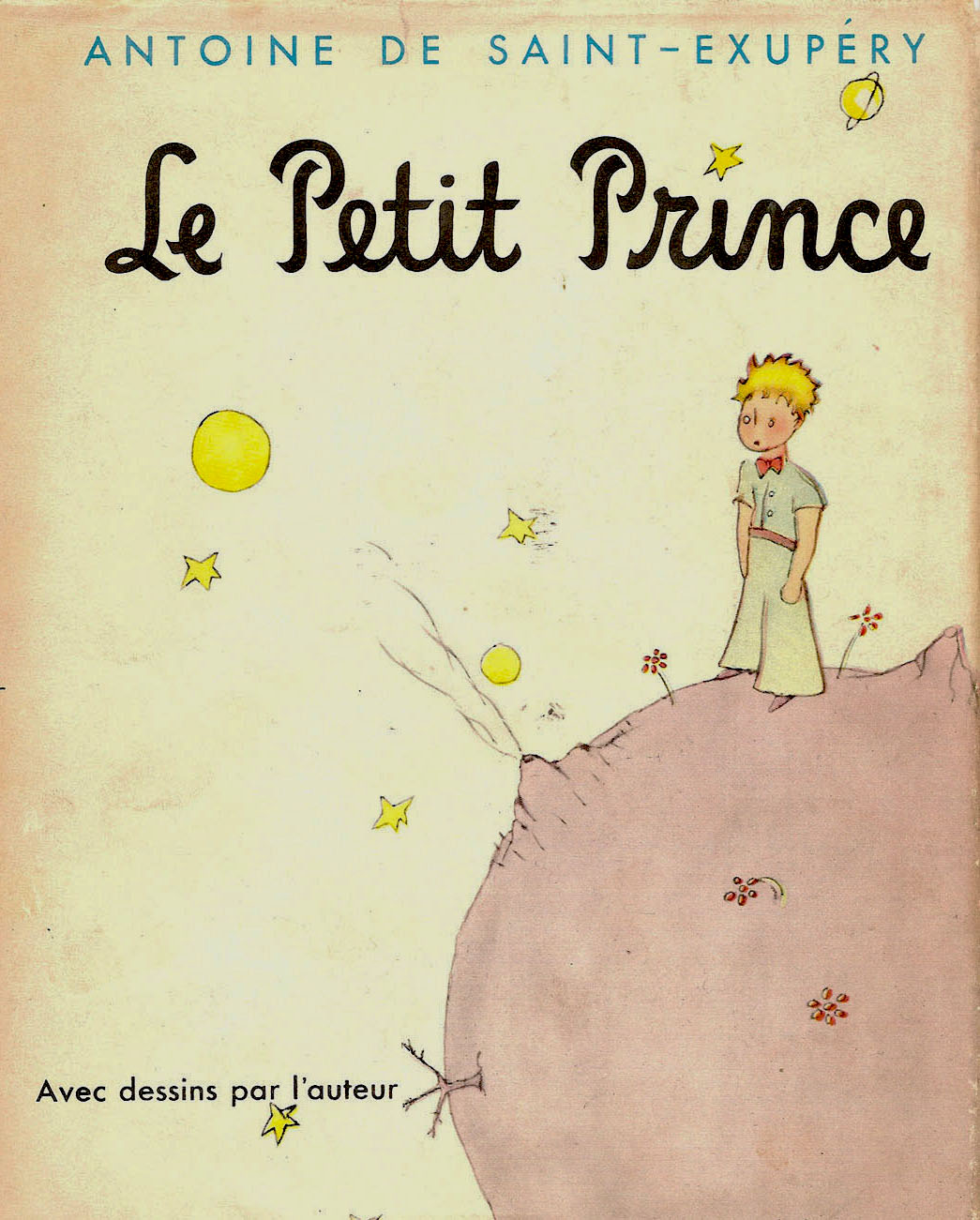
The Little Prince


I have been meaning to read The Little Prince ever since the tour guide on my trip to France recommended it to me and my classmates during my freshman year. I had the fantasy that I would magically learn enough French to read the book in its native language, but when I saw it sitting on the shelf at the Shelter Rock Library, I figured now was the time to read it. Perhaps one day I will learn how to read French. When that day comes, if it comes, I will read the book in its native language.

To call The Little Prince a children's book is a bit misleading. It's as much of a children's book as Animal Farm is. It can be understood by children, but it is primarily an allegory. While Animal Farm simplifies communism, The Little Prince simplifies life as we know it, and encourages us to question the purpose of our actions.

The story begins with an anecdote by the narrator describing the moment when his child imagination was ruined. When he was six years old, he read in a book about how a boa constructor devour and digest their prey. He drew a picture of a boa constructor with prey in its stomach, which he called Drawing Number One


Most people interpreted the image as a strange hat, so he decided to make a second image where the prey was clearly visible, which he called Drawing Number Two.
The reaction to the second picture was much more intense. Grown-ups told him to put his pictures of boa constructors away and pursue subjects like geography, history, arithmetics and grammar instead. The narrator pursued a proper adult life, but it was clear that he was dissatisfied with it, and he felt alien to the people around them.

He became an airline pilot, and one day while riding his personal plane by himself, he crashed into the Sahara desert where he met The Little Prince.

The Prince came from a small asteroid, where he was the only person living. His asteroid had two active volcanoes and one inactive volcano which he cleaned daily. In addition to cleaning volcanoes, he was also responsible for weeding out Baobab plants, because Baobabs grow into massive trees that completely engulf an asteroid planet.

Another important feature on his asteroid was a rose that he took great care of. The rose spoke and tended to be overly demanding.

One day the prince wanted to venture from his asteroid. Though he was sad to leave his dear rose, he wished to learn more about the world, so he went on a quest.

He visited various asteroids, each of which satirize various aspects of society. I found this section particularly interesting

Politics and Leadership

The first planet was inhabited by a king, who greets the Prince by saying "Here's a subject." The explanation: for kings, all men are subjects. The King speaks in a number of contradictory statements, stating that he would "tolerate no disobedience," but "all of his commands were reasonable." That is, he will command the stars, but he will only ask them to do what they have been doing already.

This describes governments quite well. Though people act as if they have power, this power mainly a conception created by the ruler.

Conceited People

The second planet was inhabited by a conceited man who ignores anything that isn't a compliment towards him. He asks The Prince to admire him, and call him the best man on his planet. The Prince notes that he is the only man that lives on his planet. The conceited man does not find this very important, and asks for appraisal anyhow. "I admire you," the prince said, "but what is there about my admiration that interests you so much?" 

The prince loves to ask questions, and though his questions are targeted towards the people he meets, they are also targeted towards us. Why do we seek admiration so much? What is the purpose?

Alcoholics

This was my personal favorite. The third planet was inhabited by a drunkard, who drank to forget that  he was ashamed of drinking.

I think the implications of this tale are obvious. Hypocrisy and inaction are rampant among members of humanity.

Business

The fourth planet is inhabited by a business man who has made it his business to count the stars in the sky, which he claims to own because nobody else has claimed them yet. The prince asks why he owns the stars. The businessman tell him that owning stars makes him rich. The prince asks why he wants to be rich. In order to buy more stars, he replies.

This mocks business and consumerist society. We spend so much time acquiring money, but rarely do we ask why.

Low-Class Workers

The fifth planet was inhabited by a lamplighter. His job was to light the lamp at sunrise and put it out at sunset. At first his job was simple because he only had to light the lamp occasionally. Unfortunately though, the planet's rotation speed increased, and now he had to go through the lighting cycle every two minutes. His orders never changed, and because he was always faithful to his orders, he was overworked.

Unlike the other planets the prince described, this was the first time he encountered someone he actually liked and admired. He was disappointed by the fact that he could do nothing to help the poor overworked man. Though I wouldn't say the book idolizes the low-wage worker, he definitely places a more positive emphasis on this character than the others. I suppose that's how many of us see low-wage workers. We want to help them, but we cannot, due to flaws in the system.

Academics

The sixth planet was inhabited by a geographer. The geographer was constantly mapping his planet, but he never stood up from his desk to examine the world around him. Instead, he requested explorers to do so for him, and he had a complex procedure in which he would evaluate the merit and accuracy of said explorers. The Prince told him about his own planet. He noted the volcanoes, but disregarded the flower as unimportant because it was ephemeral, which means "that which is threatened by imminent disappearance."The prince was not pleased with such disregard for his flower, for he viewed his flower as one of the main aspects of his asteroid.

This mocks how academics have good intentions, but often lose sight of important aspects by trying to sculpt an ideological bigger picture. It is obvious to the reader that the geographer should observe the planet himself, but, like many academics and statistical gatherers, he expects others to do it instead. In addition, the emotionally detached academic ignores important facts because they do not fit his standard of importance. The flower was very important to the prince, but the geographer ignored it because he did not think it was concrete enough. They view emotions as unimportant when in reality, emotions play a large impact in the world.

The World

After the prince visits the six planets, he comes to earth, tames a fox, and wanders around. We find out it is the anniversary of when he first arrived on earth and he decides it is time to leave. The narrator is sad to see him go but touched by the experience that he has had. I admit, I teared a little at this part. The prince leaves and the narrator continues his life.

I found this book very touching for a number of reasons. First of all, it reminded me of what it was like to be a child, before having my mind tricked into the system that we live in now. Children ask many questions, but adults, not as much. It was said throughout the book that the prince "never in his life let go of a question once he asked it." He asks obvious questions that we our too afraid to ask, for when we inquire as to the purpose of our action, we often discover that no purpose exists. Our expectations shatter, and we are left to pick of the pieces of what we perceived as reality.

I believe that while these shattering experiences can be traumatic, they are ultimately healthy. They are part of a necessary process that one must go through in order to become a fully wise, understanding, and independent individual. 

Too often we are lost in the details, when we should be seeing the world from a detached point of view. Recently, I have been reading a book called Timescale by Nigel Calder. The book is an attempt to chronologically organize the history of the earth and the universe. In the opening, the author talks about how many theories have been subordinated by scientific discoveries, and how academics often fear accepting the truth because the truth disproves their own research and hypotheses. For example, and this is something you may not know, Charles Darwin's theory of natural selection is not entirely accurate. Although some genetic adaptations are adopted because they give a species an advantage for survival, there is much evidence to show that many genetic adaptations are completely neutral. That is, they neither hurt nor help the organism, so they end up staying. Many Selectionists denied these theories because they did not fit their perfect idea of how organisms are perfectly crafted to be the best that they can be through survival. Science is always changing.


He then goes on to view the earth from the point of view of a Martian. He observes everything from a completely detached point of view, from governments to weather patterns to culture to migration. He notes that there is a clear tendency for the white man to be more rich and successful than the black man, which is likely what a martian would observe if they could only observe the planet visually from a distance. He describes how the wealthy manipulate other people into producing food for them by exchanging objects. This gave me a greater understanding of how the world worked in a manner that made sense. Without specific details, there is a clear system, and that system is clearly flawed in some ways.

So instead of getting lost in the facts, we should spend more time examining the bigger picture. Not only is it humbling to view the world from the point of view of a martian, but it is also enlightening. To question the system does not mean to destroy it. All it means is that we gain a better understanding so we can know how best to contribute to the system and to one another. It also prevents us from getting lost within the system, because when we lose ourselves in the system, we lose ourselves as people.

Bibliography

Calder, Nigel. Timescale. New York: Viking Press, 1983. Print. 
Saint-Exupéry, Antoine De. The Little Prince. Orlando: Harcourt, 1943. Print. 

Thursday, March 28, 2013

An Overhaul

I've been thinking and rethinking possible approaches to my blog. Overtime, it seems that my blog has changed, much like I have changed. It began with my meditations upon certain topics, continued into being a daily record of a large project, and has now become a combination of thoughts, records, and responses.

Now, I'm thinking I want to make my blog a record of the art I observe and the art I create.

I see almost everything that I do as a project. Every book I read, every film or TV show I watch, every piece of art that I make, these are all projects for me. I keep these all in a mental record in my head, which can be overwhelming. What can I do to remember my thoughts for everything that I do?

After writing responses to the books that I read, such as The Untethered Soul and Let Your Life Speak, I realized that writing blog posts is a very effective way of retaining important information. Not only does it help me retain information, it also helps me process the information. It takes the abstract thoughts that I have in my head and places them into a concrete set of words that I can reference whenever I like. What a miraculous tool that is!

Clearly, this is something that I ought to do more. It definitely helps me, and it may help you guys as well.

The only issue is that I give myself MANY projects. I can make a list of all the things I have done so far this vacation alone

  • Watched The Passion of the Christ 
    • Because a few friends recommended I watch it in honor of Holy Week so I can learn about Christianity
  • Watched an episode of Sherlock Holmes 
    • Because British television is great
  • Finished a book about Irish folk music 
    • Because I started it two months ago and I never got the chance to finish it
  • Read The Little Prince 
    • Because I renewed my library card for the first time in 2 years and I saw it while browsing the teen lit section. I made a promise to myself that I would teach myself enough French to read it, but frankly, that wasn't going to happen anytime soon, so I figured I would read it now
  • Learned more Spanish 
    • Because I want to be bilingual and I have friends fluent in Spanish so why not?
  • Retaught myself how to knit 
    • Because I have trouble sitting still during television shows like Sherlock and I figured, why not watch TV and do something productive?
  • Cooked a tea recipe 
    • Because I love tea
  • Helped Danny make puppets for the puppet show
    • Because that is my project
  • Added more of my mom's CDs to my harddrive
    • Because I have an ongoing project to convert all of her CDs to digital
  • Watched Daniel Glover do standup
    • Because Julian showed it to me, and he's excellent in every way
  • Toured NYU and Columbia
    • Because soon I'm going to have to become an adult
I'm a finisher. I'm addicted to finishing things. I think this is a good addiction compared to most addictions. I don't watch TV for hours on end, I don't watch youtube videos. I collect culture. I want to watch all of the great movies, read all the great books, know all the great actors, understand history from the creation of the earth until now, speak a number of languages, and keep up good fashion. It sounds like much, but with my small projects, I'm conquering the world little by little.

I specifically plan out my projects in a way so that I never feel overwhelmed. Though I do many things, I limit myself within my, genres? For example, I will only read one or two books at a time, watch one or two movies a week (sometimes less), and listen to one or two new CDs a week.

I read an interesting article that Shiana posted for my English class. It said that people work most productively when they work in 90 minute intervals, followed by breaks. When I spend enough time on one project, I switch to another. This switch re-energizes me, and allows me to be active constantly. I love it. By the way, if you are more interested in the connection between sleep, work intervals, and productivity, you can read the article here.

Because I do so many things, I probably can't blog about them all, or else I will spend more time reflecting than doing, and I am a woman of action. At the same time, blogging will help me slow down, because if I don't exert self-control, I can spin out of control with insane projects. It's all about following The Way, staying on the tightrope, finding a middle ground. Thankfully, years of experience and active self-observance have greatly helped me exert this self-control. I'm doing well.

Some final notes on organization and appearance. A friend of mine gave me two recommendations. First of all, he told me I should get a new theme. I've actually have a lot of difficulty finding a decent Blogger theme that wasn't covered with sparkling skulls, or wasn't too HTML complex. I do have vague recollections of HTML knowledge from my Neopets days, but the most I can do it edit a toolbar and change a font.

Secondly, he told me I should use more pictures. I hadn't thought of using pictures much because I'm so focused on writing my thoughts, but pictures would probably make it easier for other people to read, and it will make the post more active.

Wednesday, March 20, 2013

Stitler Finale

Yesterday, I decided it was finally time to finish the Stitler project. I figured it would be easily and fun to complete, and I would end up with a quality product.

I must admit though, when I attempted the project again, I felt as if it had lost its luster. It wasn't as funny to me as it was before. I didn't acknowledge my feelings at the time because I did not want to be discouraged, and I didn't want to be negative. Danny and I downloaded a number of slow motion clips to add in between. I edited things together and tried to make the foreigner lyrics more in sync with the voices of Hitler and Stalin. After piecing a good amount of it together, Danny recommended that a change of song might uplift the project.

At that point, he had to leave for chorus, and he gave me the permission to do whatever I saw fit for the video. I used the song MacArthur's Park, because it is a silly romance song, and I thought it would uplift the video. Unfortunately, I think it made me even more unenthusiastic. Perhaps I had already heard the song so many times, it no longer seemed silly to me. On the bright side, the song had a number of instrumental sections, so the film was easy to compile.

Once I had pulled everything together into a generally cohesive video, I decided it was finished. I had completely lost all willingness to continue. It wasn't that I was angry. I was simply done. I had nothing else to add.

So does this project have added meaning? In the beginning I would have said yes, but at this point, I do not think so. I don't think there is anything profound about the video. In fact, I barely find it entertaining to watch. It is nothing more than random clips compiled with mediocre pop song lyrics. Where did the magic go? I'm not sure. It disappeared.

But at least it was fun while it lasted.


Sunday, March 17, 2013

Scholarly Review: Evita

Yesterday, after months of begging by a friend, I finally saw Evita. It taught me a good amount about society in South America. It also taught me there is a lot I will never understand about society in South America.

Plot

The film begins in a movie theater where a film is abruptly stopped with the announcement that Eva Perón has passed away. Everyone in the theater cries vigorously, and we watch the funeral proceedings. At this time we are introduced to our narrator, Ché, who is somewhat resemblant of Ché Guevara  but mainly acts as the human embodiment of Argentina. He has a neutral expression, and he claims that while many admire Evita, she actually hasn't accomplished much in her past few years.

We see Evita as a child. She is the bastard child of a poor woman and a rich man, and her father has just passed away. She, her siblings, and their mother are not allowed into the funeral because his family thinks they are scum. Despite this, she runs inside the church and kisses her father's forehead, bidding him a final goodbye before she is quickly thrown out. This experience made her despite the upper-classes.

Next, we Evita all grown up, as played by none other than Madonna. She is in an affair with a tango singer, Agustín Magaldi. One day, she tells him that she wants to go to the big apple, Buenos Aires. Magaldi is unable to change her mind, and he takes her there. He leaves her, and she decides that she will simply try to have as many affairs as possible in order to increase her leverage. She becomes a model, a radio personality, and an actor (albeit a very bad one).

She meets Colonel Juan Perón at a fundraising event. She easily seduces him, and they develop a powerful relationship. The upper-class people dislike her, and they believe Perón is a fool. She detests them in return. However, the people of Argentina love her for being one of them, and this gives Juan Perón serious political leverage. When he is taken as prisoner, she campaigns for his release, stating that "He supports you, for he loves you, understands you, is one of you. If not, how could he love me?" It works, and he is released. Soon he is elected as Argentina's next president. In the song "Don't Cry for Me Argentina," Eva preaches to the people of Argentina that she will serve the "descamisados," literally those without shirts, the poor. 

Eva dresses herself in luxury clothing such as Dior and goes on a "Rainbow Tour" across various countries in Europe, I suppose to promote Argentina. Spain loves her, Italy calls her a whore, and France is ambivalent, because at that point in the tour she seemed to become detached and apathetic. This was due to a sickness that worsens overtime.


She returns to Argentina and starts a charity organization. At the same time, the country is falling apart. Other Perónists plunder the treasury. Violent civilian demonstrations are suppressed brutally by the military.


Eva seriously considers running alongside her husband as a vice presidential candidate, but her sickness weakens her to the point where she resigns. At this point, she is very clearly dying, and she bids her people a final farewell with a reprise of "Don't Cry for Me Argentina." We enter a parallel universe where she dances a tango with the narrator Ché as he criticizes her. "How can you claim you're our savior when those who oppose you are stepped on, or cut up, or simply disappear?" She defends herself.


Lastly, we see her sick in bed, wishing her physical body was as strong as her heart and passion. She dies of cancer. The end calls back to the beginning, with Ché standing above her coffin, speaking some final words.

Reflections

In the United States, we do not have a rigid class structure Our country values hard work and social elevation. This is not true in a majority of places in the world, and I feel like it's difficult for Americans to understand that, myself certainly included. Living in Long Island suburbia, it is even more difficult. Because taxes are so high in our neighborhood, the only people that can afford to live here are of a similar socio-economic class. We live in a bubble. It's delightful to grow up in a bubble, but it won't give you a full understanding of how the world works.

This concept of socio-economic differences really started to make sense to me when Eva tried to visit her father during his funeral in the beginning of the film. His family treated her like utter filth. I've never seen people treated in that manner in my own life except for homeless in New York City. Perhaps I could get a better perspective if I imagined New York City with a LARGE population of homeless people.

I think casting Madonna as Eva was a very good choice, because her rise in society was quite similar to Eva's. Madonna grew up in Michigan, and one day she ran away to New York with nothing more than $35 in her pocket. It was then that she worked her way up in the music business and did all sorts of interesting things that I do not know much about.

One interesting thing my friend pointed out to me was Eva Perón's blatant hypocrisy. She claimed to be one of the people, but then she dressed in luxury clothing and toured around Europe. There is one song where Ché asks her, "Forgive my intrusion, but fine as those sentiments sound


Little has changed for us peasants down here on the ground

I hate to sound childish, ungrateful, I don't like to moan

But do you now represent anyone's cause but your own?"


Later, violence is still widespread. I got quite confused at this part, and I didn't quite know what was happening. First, there were clips of the Peróns with their puppies, next, buildings are being blown up. I believe this has to do with the ignorance of the Peróns to the condition of their country, but I'm not very sure.

I think the main point of the film was to communicate how much the poor have been ignored, and how much they admired this woman they believed spoke for their cause. It depicted a good amount of manipulation. Eva didn't do much other than look pretty and establish a charity and I don't even know how much efficacy her charity foundation had. I think her main accomplishment was finally representing the poor in an upper-class dominated society.

At the end of the musical, I asked myself, "What was accomplished?" To me this seemed very unclear. The musical left me wanting more, but I can't put my finger on exactly what that "more" is. 

Perhaps that is a reflection on the pointlessness on life. Why do we try to succeed? Why do we search for elevation? What makes the world a better place? Though Eva rose quickly in society, she never had an end goal. It wasn't clear why she did what she did, other than she needed to survive and she enjoyed power. The film felt oddly like you were stuck in an abyss.

This all brings up more questions than answers. Maybe it will make more sense if I let it grow on me. 


Edit:

After discussing the movie with my friend, I have a few more things to add.

Eva's goals are actually pretty clear. She is a megalomaniac. You can see this from the very beginning. The singer Magaldi with whom she had her first affair told her, "Eva beware your ambitionIt's hungry and cold, can't be controlled, will run wild." To her, everyone was a tool. There's a whole song in which she talks about how she uses love affairs to elevate herself. 


"There is no one, no one at all


Never has been, and never will be a lover, male or female

Who hasn't an eye on, in fact they rely on

Tricks they can try on their partner
They're hoping their lover will help them or keep them
Support them, promote them
Don't blame them, you're the same"

I had the impression that Eva had lost her ability to become emotionally attached to people due to how she was rejected so harshly by Magaldi, but in real life, she never had an affair with Magaldi. It is very possible that from the beginning she was manipulative and incapable of emotional connections. Throughout the film, it's not clear if Eva even loves Perón, or simply sees him as another object.

There is a clear hypocrisy of Eva's persona. She despises the middle-class and yet she essentially becomes one of them. In the beginning she sings,

"Screw the middle classes! I will never accept them!
My father's other family were middle class
And we were kept out of sight, hidden from view at his funeral."


When she first begins her relationship with Perón, the other upper-class people sing,


"Things have reached a pretty pass
When someone pretty lower-class
Can be accepted and admired"

She wants to destroy the middle-class, but at the same time, she wants their power. She establishes her own kind of upper-class which is sustained by the masses because they believe she was one of them. She is against the higher classes and she is one of them.

When the country is destroyed, she is aware of what is happening, but she does not act. Ché says, "Turn your blind eye, Evita, turn your blind eye." Buildings are exploding, chaos is rampant, and the way she reacts is by closing down the press, and suppressing those who disagree with her.

Soon after she starts dating Perón she sings,

"High flying, adored
That's good to hear but unimportant
My story's quite usual
Local girl makes good, weds famous man
I was stuck in the right place at the perfect time
Filled a gap, I was lucky
But one thing I'll say for me
No one else can fill it like I can"

Since the beginning of Spanish colonization, nations in South America have been dominated by megalomaniacs and kleptomaniacs. Before, these megalomaniacs were sustained by social structure and ruthlessness. Now, they are sustained by manipulation of the masses.