Yesterday, I downloaded the program Nanostudio to my computer. Why? Well, it was free. And lucky for me, it came with an amazing tutorial, not only explaining the features available in the program, but what these features actually do.
I'm a very hands-on/visual learner. Give me an instrument and I can make a sound quickly, but give me a book, and I can stare at the words for hours, trying to decipher them the way that someone would decipher an art piece of Duchamp's.
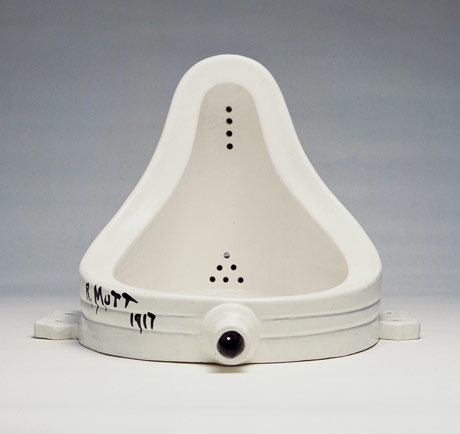 |
| What does it mean? I don't understand. |
Although a majority of the words I needed to know were explained, some were not, and I had to push through the wild forest of the internet to find definitions. Thankfully, a lot of the information is cumulative, and the more research I do, the better I become at interpreting the information.
While learning how to use the drum pad, I found out that an output bus is a device that communicates sounds to the CPU, and send effects are sound effects the output bus adds directly to the sound before sending it to the computer (I think).
Velocity is the force of which a pad is struck, determining the volume. When you're not using your hands, this is important.
Here's a picture of the drum pad.

The synthesizer had much more to teach.
An oscillator generates sound, and its waveform determines the sound, based on the shape of the soundwaves.

Filters change the sound of the oscillator by removing certain frequencies (basically taking away higher sounds, lower sounds, in between sounds, or a combination).

Low Pass allows low frequencies, and takes away high frequencies.
High Pass allows high frequencies, and suppresses low frequencies.
Band Pass works in the middle.
The filter envelope allows for the sound to be shaped over a period of time, and prevents sound from being flat. This happens in 4 steps.
Attack: How quickly the envelope reaches the maximum level. I'm not sure, but I think this means how long it takes for it to reach its loudest level, or most intense level.
Decay: How quickly the envelope drops to the sustain level, where it remains steady.
Sustain: The level where the sound remains steady until it is released.
Release: How quickly the envelope fades to minimum when released. When the sound cuts out.
 |
| In the left picture, the upward slope is the attack, followed by the dropping decay, the dormant sustain, and the ending release |
Insert effects adjust the sound like send effects, but instead of recreating the sound, it simply changes it.

By the end of the 3 periods, this is about as far as I got, which isn't so bad. I won't be making a mix tomorrow, but at least I'm starting to understand audio engineering for the first time in my life. There's still much to work on, and I'm probably going to have to read the manual 5+ times before all of the functions stick in my head, but it's all good.
In addition to all of these learnings, I had a bit of an epiphany today.
I asked Luke a simple question. "After an audio engineer has experience, does he know exactly what he's doing? Does he know what every function does to the sound?" To me, it seems crazy that anyone could understand every minute detail of this complex system.
I got a response along the lines of this.
"At first, he does just play around with buttons, but after a while, he knows exactly what he's doing. His ear is trained so that he can tell what each track needs, and he has the abilities to make the changes necessary."
"Of course, it's a lot of fun to experiment. A few of my buddies would buy mixers and spray paint them black so they couldn't see the buttons."
"At first, you can get beginner's luck. But after a while, the tools begin to wear on you and become old. It's like when you make a friend and it's really exciting to hang out with them the first time, but after the 40th time it's just like 'hey'."
"It's like love. It starts out amazing and goes downhill. It's like sex. After a while you're just like 'hey'."
Thank you Luke for your words of wisdom. I'll be sure not to get my hopes up.
"After a while though, you realize it's good to be in control of what you're doing."
Ahh, human nature. You seek what you desire, and once you achieve it, you realize what you left behind. Anyway...
Luke introduced to me the idea of 3 dimensional sound, and I listened to Animal Zoo by Spirit. Although audio is only observed left to right, it sounded like things were coming from all directions: forward, back, above. But how could this be?
Well, we see art that looks 3D, even though it's on a 2D surface.
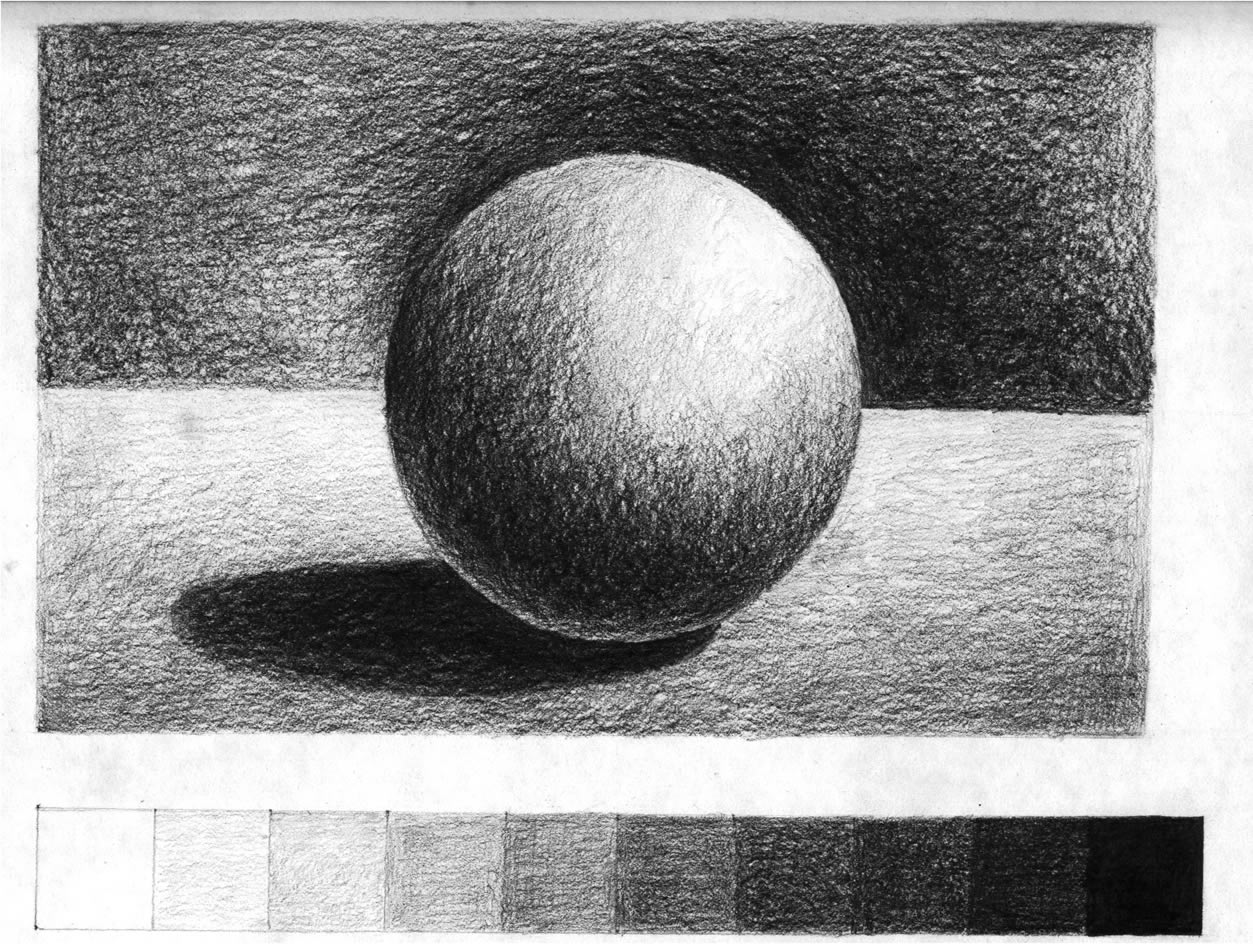
Although the picture is surely 2D, it gives the impression of a 3rd dimension, and that's exactly the goal audio engineers are looking for when they mix a recording.
I went back and listened to the mix I made yesterday. Needless to say, it was flat. If you were to compare my song to Animal Zoo, it'd look like the difference between the above image and a circle doodle.
 |
| At least I'm well-defined! |
I wonder if you can create audio illusions that fool your ears like visual illusions fool your eyes.
On that note, I'm going to end this post. Tomorrow I shall work final touches on my previous Garageband mix and explore Nanostudio further. I'm taking things in steps. It's a healthy process.

Great post! You've covered in one day what used to take me a months to teach to num nuts at college! My god! Soon, we will actually able to REALLY TALK AUDIO TOGETHER! Most excellent!
ReplyDeleteCongrats - you understand basic synthesis!
Find me tomorrow and I'll explain the difference between a send and an insert.
Most excellent!
Luke