Before I comment on this article, I want to make a few things clear.
- I am skeptical of articles that place sweeping generalizations on an entire generation of people
- I am skeptical of articles that generalize the younger generation as perceived by the older generation
- I am skeptical of articles coming from the Huffington Post
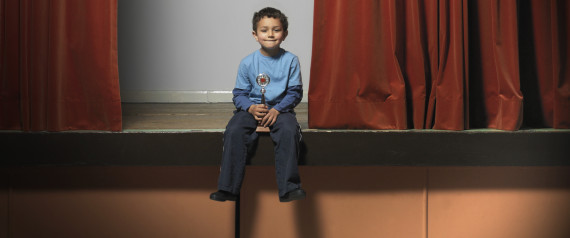
I do think the article raises some decent points, and it can apply to certain students that I've seen, but I would be reluctant to grade our entire generation as self-involved and unable to fail.
One of the major points the article makes is that students are not allowed to fail when they're young, which leads to issues later. I think this is a good point, but I would be reluctant to blame parents for not letting their students fail. Instead, I think it is worth analyzing how the current culture lacks the flexibility to fail. Perfection in grades and other aspects of life are all the more vital nowadays as colleges and jobs become more competitive. Failure in the short run can signify failure on the long run, which makes kids afraid to fail, and makes their parents afraid to let their kids fail.
Protective parenting is not a new phenomenon by all means. Though I do not have empirical data to support my claims beyond stories I've read or TV I've watched, the phenomenon of the spoiled and sheltered rich kid has been around before Generation Y. Perhaps the reason more kids are sheltered is because our society as a whole has become more affluent, so more parents are adopting these practices and making them mainstream.
To blame the new phenomenon of protective parenting on a short Tynenol epidemic seems like a simplification. Also, though the article makes claims that "parents...did their homework for them, resolved their conflicts at school with both friends and teachers, and handed out trophies for just showing up," I haven't seen this very much in practice. I have seen parents filling their children's schedules, and I think that is a valid point.
If there is an "issue" to define our generation, I don't think the parents are too responsible. The issue is that expectations are ridiculously high and there is no room for failure. THAT is why people are disappointed by their inevitable failures later in life. People aren't taught that they will automatically succeed, they are taught that mindless work is the ONLY way to succeed, and the only way to succeed is to be at the highest level. And while mindless work is easy to do, the success it supposedly guarantees is harder to achieve, which makes people confused when their effort does not equate to success.
If we were to view this in terms of economics, the issue is, we have a surplus of educated and qualified people that we simply cannot accommodate to in our economy at the size it is. Though the number of incoming college students has increased greatly over the past few decades, the number of high level schools has not increased in tandem. Some jobs that were originally thought of as reliable have decreased in demand in our current age, but the number of people studying these jobs has not necessary decreased in tandem.
There is still room for the exceptionally intelligent minds, but not everyone is exceptionally intelligent, and perfecting your grades does not necessary make you exceptionally intelligent. And even if you are exceptionally intelligent, there are so many great minds out there, much of success is determined by dumb luck.
So how do you teach students to stop being self-involved? Give them flexibility to care about things outside of their fragile quest for personal success.
Either that, or we need to redefine the idea of success and happiness beyond job achievement.
Either that, or we need to redefine the idea of success and happiness beyond job achievement.

I agree that parents in general aren't directly responsible for the problems of our generation, but I think they help enable this problem. Two weeks ago, my social studies teacher brought her daughter into class. The girl played on a cell phone for the entire period and remarked that she wanted to listen to "Gangnam Style." Some of my fellow classmates found that adorable, but quite a few (including myself and a number of my fellow STACies) were perturbed, if not disturbed, by this. Okay, maybe Gangnam Style isn't the least appropriate song out there, at least not by today's standards. But still; call me old fashioned, but I don't think six year olds should be listening to songs where the only phrase a six year old would understand (the only line in English) is "Hey, sexy lady." Thanks to the phone that the girl had, she could have looked up the word "sexy," and that wouldn't have been good. (Google "sexy" - many of the results are less than child-friendly.) My kids are going to spend the first nine years of their lives playing outside and reading. I'll be damned if they have an iPhone, or the future's answer to an iPhone. This trend continues well into the teenage years. There are many exceptions, of course, but parents in general are very relaxed these days. Lots of parents don't seem to care if their high school-age sons and daughters are coming home drunk, and yet some of them, and society at large (as you mentioned), holds them to ridiculously high expectations. So, while expectations are exceptionally high, some parents enable their children to relieve the stress of this in all the wrong ways, which only furthers the problem. At least that's my take on things today.
ReplyDeleteI understand what you're saying, but I'm not sure if relaxation is what causes the problem. I can tell you that my parents raised me in an extremely relaxed way, but I never got very involved in bad online influences. I mean sometimes I got addicted to virtual pet websites, but I think these served to build my character in a strange sort of way. Also, I feel like even as kids, we listened to some pretty erotic pop songs worse than Gangham Style. I remember being at kid's parties and hearing songs like "Hot in Herre," and some of those Britney Spears tunes were pretty borderline.
ReplyDeleteI do agree though that parents should push good influences on their kids. My dad forced me to read for a half hour every single day until I was around 12. Though at the time I wasn't a huge fan (I would try to cut the time short by saying I reached the end of a chapter and I didn't want to start a new one), but it truly cultured me.
I think parents should talk to their children and build their relationship more so their kids don't end up reliant on such technologies or involved with bad crowds. They should give their kids the information they need to make decisions, and then force them to make those decisions so they don't become reliant.