(a TED Talk)
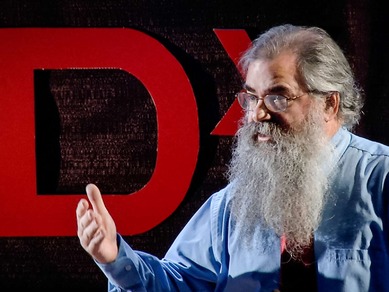
Dan Cohen, an academic working at Colby College, has spent much of his life analyzing the art of argument. According to him there are three kinds of cognitive arguments.
1. Argument as War: Arguing to defeat the other debater in an adversarial context.
2. Argument as Proof: Stating a theory that is up to question. Think for example, mathematical proofs as arguments. This is not necessarily adversarial arguing.
3. Argument as Performance: For example, a political debate. It is like argument as war, but with the audience as additional participants. These audience members essentially act as a kind of jury.
The issue with debate nowadays is that it is primarily centered on the first type of arguing, argument as war. This gives us the mentality that we debate to win. Those who succeed with tactics are right, and those who fail are made to feel ashamed.
The problem with this type of argument is that it elevates tactics over substance. Essentially, the debate becomes less about the subject at hand and more at wanting to win. What does this winning accomplish? It may be rewarding, but defeating someone in an argument doesn't actually contribute much to you as a person.
In fact, you gain MORE by losing an argument, because you are able to absorb new facts that you never considered and find new solutions. Productive argument means that two people are working together to find a solution. Refutation only acts as a way of eliminating what is ineffective, and not as a manner of proving superiority.
It is a shame that people in this world believe that winning is more important than compromise, and I believe this sets us back and prevents us from resolving serious issues in our society.
So the next time you argue with someone, think less about proving yourself right, and more about what the other person has to say. You may learn something.

What type of argument would my color theory be?
ReplyDeleteThat would be argument as proof, but you would have to form a coherent theory that can be refuted and tampered with before it is considered an argument.
ReplyDelete